
Apophyllite
Apophyllite is known for its clear, glassy crystals, delicate structure, and bright reflective sparkle. Usually found as transparent or translucent crystal clusters, points, or tabular formations, it has a clean, airy presence that makes it especially admired in mineral specimens, decorative displays, and mindful spaces.
Main Energy
Clarity, calm, spiritual awareness
Chakra
Third Eye and Crown
Element
Air
Family
Apophyllite Group; hydrated phyllosilicate
Hardness
4.5–5 on the Mohs scale
In This Guide
Formation
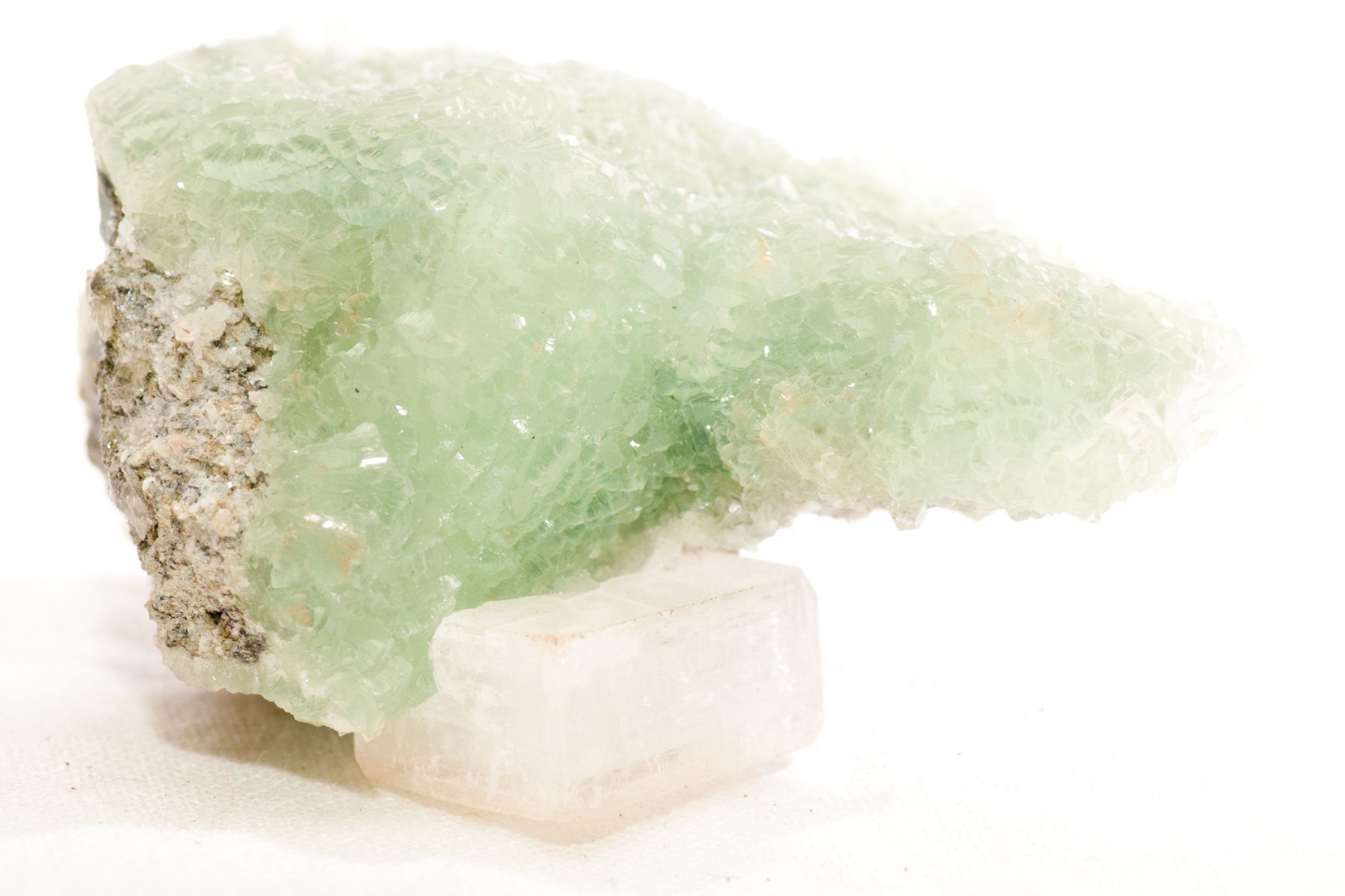
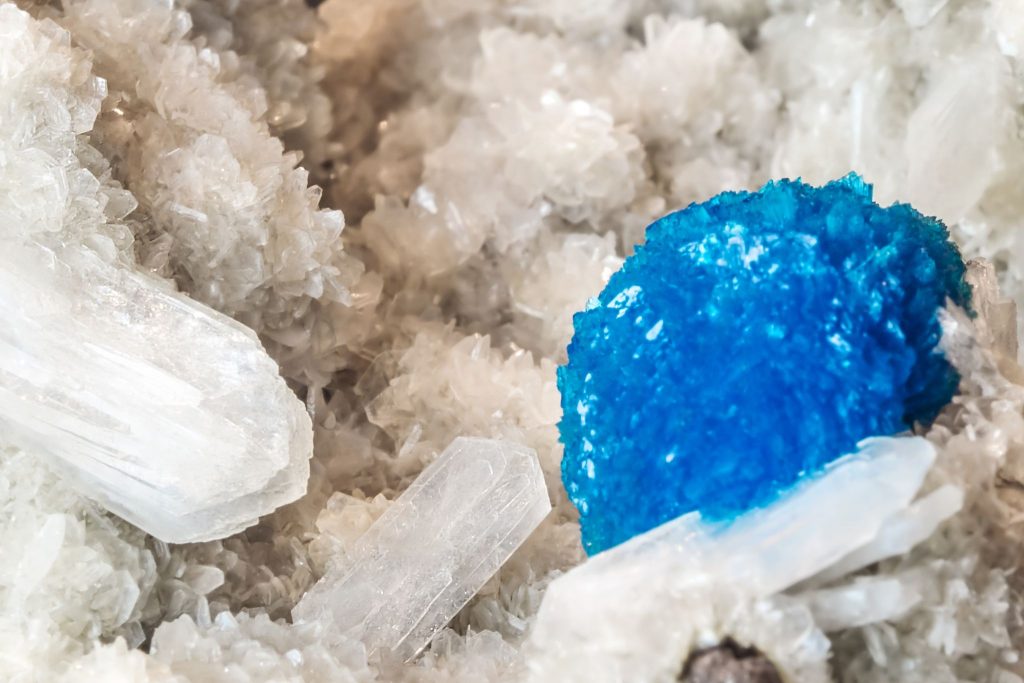
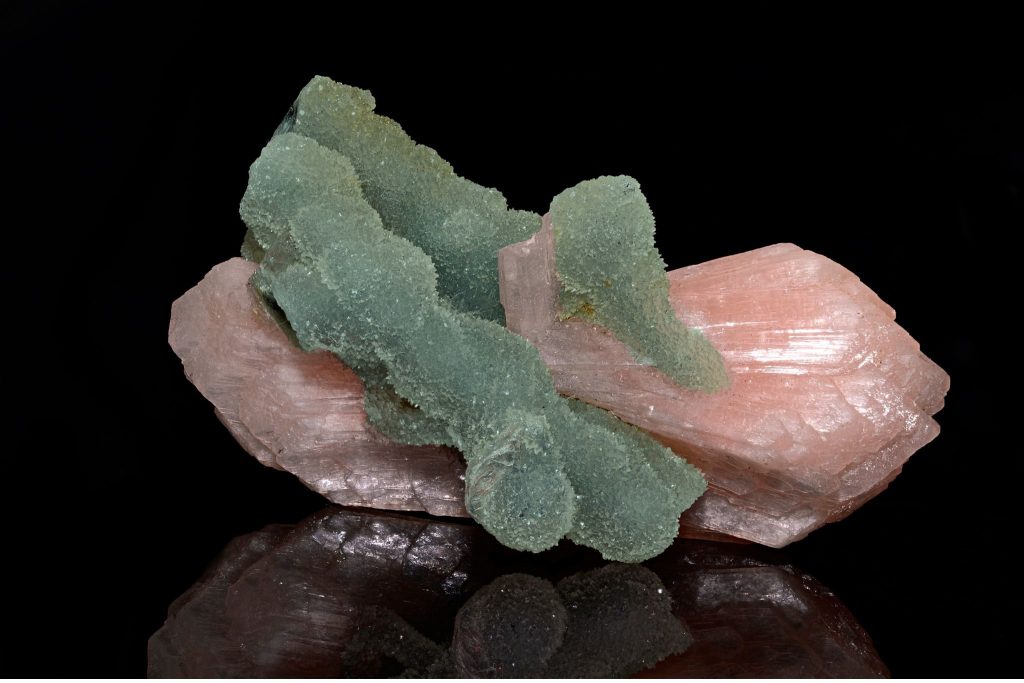
Apophyllite usually forms as a secondary mineral in cavities, veins, and gas pockets within basalt and other altered volcanic rocks. Mineral-rich hydrothermal fluids move through these open spaces and slowly deposit apophyllite as conditions change. Over time, the crystals can grow on the walls of the cavity, creating sparkling clusters, tabular crystals, or transparent points on a rocky matrix. Apophyllite is often found with calcite and with zeolite minerals such as stilbite or heulandite. In some localities, it may also occur with prehnite or cavansite, forming beautiful mixed mineral specimens.
Colors
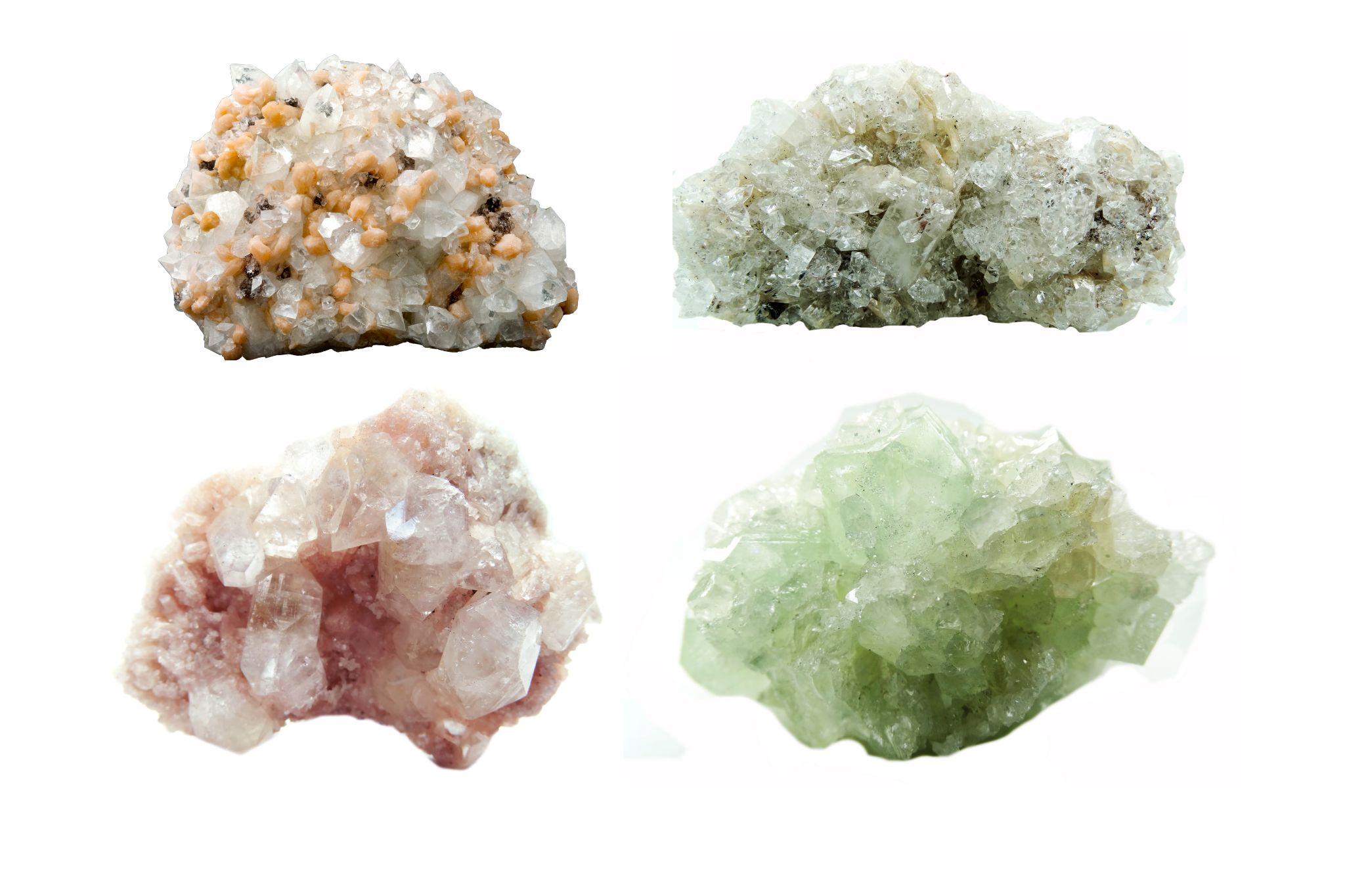
Apophyllite is most often seen in clear, colorless, white, pale green, yellow, pink, or violet tones. Green and colorless specimens are especially well known, while stronger or unusual shades are less common. Its color may be influenced by trace elements, inclusions, and the minerals present in the surrounding matrix.
Origin
The most recognizable source of Apophyllite is Maharashtra, India, especially the volcanic Deccan Traps region, where many well-known crystal clusters have been found. While Apophyllite occurs in many parts of the world, Indian specimens are especially valued for their clear, white, and green crystals, often associated with stilbite and other secondary minerals. Other important sources include the United States, especially New Jersey, as well as Brazil, Mexico, Canada, Germany, Norway, Scotland, and South Africa.
History
Apophyllite entered modern mineralogy in the early 19th century, when it was described and named by the French mineralogist René Just Haüy. Its name comes from Greek roots meaning “away from” and “leaf,” referring to the way the mineral can flake or separate when heated due to water loss. Although apophyllite was once treated as a single mineral, it is now understood as a group of related phyllosilicate minerals, with several recognized species based on chemical composition. Over time, its clear, glassy crystals became valued as mineral specimens, decorative stones, and meditation crystals, admired for their bright reflective surfaces and delicate, luminous appearance.
Spiritual & Emotional Properties
Apophyllite is often used to support a calm, clear, and centered inner state. Its energy is associated with higher awareness, intuitive insight, and emotional lightness, making it especially suitable for meditation, quiet reflection, and gentle energy-clearing practices.
Clarity & Inner Light
Apophyllite is associated with mental clarity, lightness, and a cleaner inner focus, making it a gentle stone for quiet reflection and spiritual awareness.
Calm & Uplifting Energy
Its soft, high-vibration energy is often linked with calm, emotional ease, and a brighter, more peaceful atmosphere.
Higher Awareness
Connected with the Third Eye and Crown Chakras, apophyllite is often used for intuition, higher awareness, and a deeper sense of spiritual connection.
Dream Work
Apophyllite is associated with dream awareness, lucid dreaming, and subtle inner guidance. It is often used to support reflection, intuitive messages, and a calmer, clearer nighttime state.
Energy Clearing
Often linked with energy clearing and renewal, apophyllite is used to refresh the atmosphere of a space and support a lighter, more open energetic flow.
Meditation & Stillness
Apophyllite is a popular meditation stone, valued for its clear, reflective presence and its association with inner stillness and focused awareness.
Traditional Wellness Associations
Disclaimer: The following information is based on traditional crystal practices and metaphysical associations. It is not medical advice, diagnosis, or treatment, and should not replace professional healthcare. Crystals may be used as a symbolic or complementary support practice, but they should never be used as a substitute for medical care.
Breath & Respiratory Ease
Apophyllite is traditionally associated with the breath and respiratory system. It is often used as a symbolic support for calmer breathing, openness, and a lighter sense of physical ease.
Nervous System & Stress Relief
Often linked with relaxation and energetic quiet, apophyllite is used to support rest, stillness, and a calmer body-mind state during periods of tension or overwhelm.
Sleep & Nighttime Balance
Apophyllite is commonly used near the bed or in evening practices to support a peaceful nighttime atmosphere, restful sleep, and a softer transition into rest.
Eyes & Clear Perception
Associated with clarity and light, apophyllite is traditionally linked with the eyes, visual focus, and clear perception, both physically symbolic and energetically intuitive.
How to Use Apophyllite
Bedside / Dream Work

Placed near the bedside, apophyllite is connected with dream awareness, lucid dreaming, and a calmer nighttime atmosphere. Its energy is often used for reflection, intuitive messages, and gentle inner guidance.
Meditation

Hold apophyllite or place it nearby during meditation to support stillness, higher awareness, and a clearer connection to inner guidance.
Crystal Grids
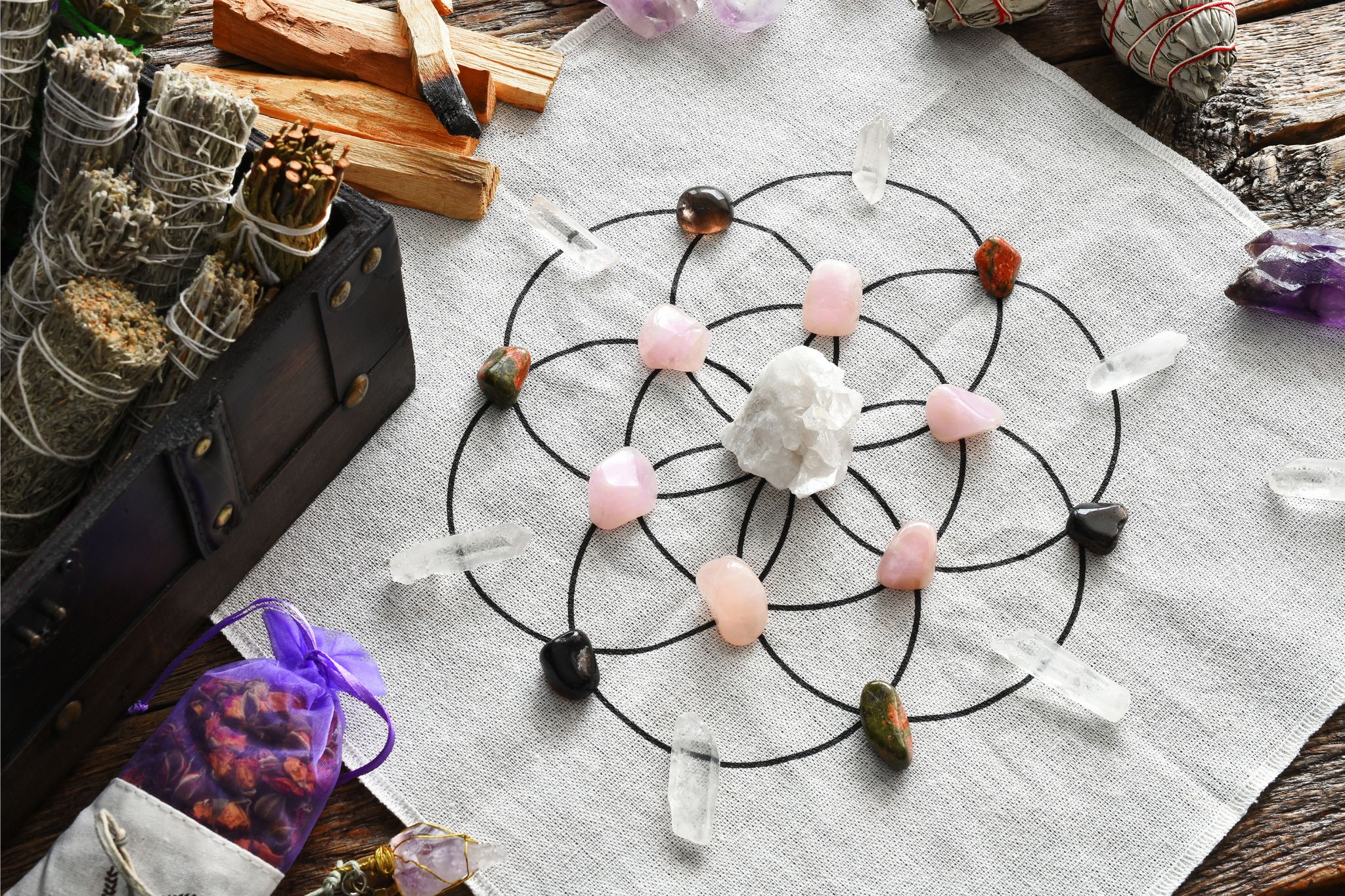
Apophyllite is often used as the anchor or center stone of a crystal grid, amplifying the energy of the surrounding stones and giving the layout a clear, focused energetic direction.
Energy Clearing
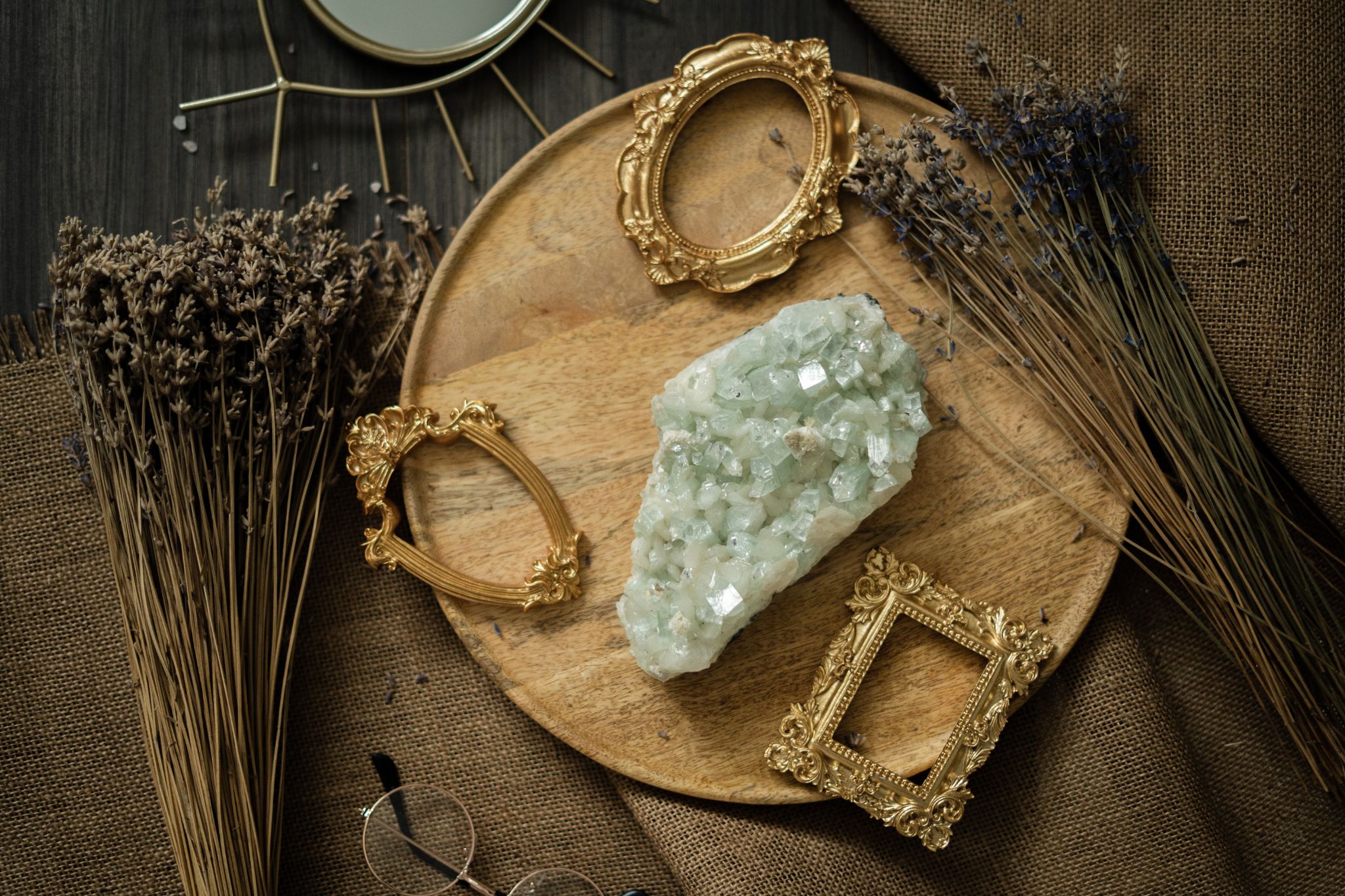
Apophyllite is valued for creating a lighter, clearer atmosphere in a room, altar, or healing space. Its bright, reflective energy is associated with renewal, openness, and clearing stagnant energy.
Cleansing & Care
Apophyllite is a delicate crystal with a Mohs hardness of about 4.5–5, perfect cleavage, and a brittle structure. It should be handled gently, especially when it appears as a cluster, point, or specimen on matrix.
Physical Care:
For dust removal, use a very soft makeup brush, artist brush, or a gentle stream of compressed air from a safe distance. If needed, wipe carefully with a soft dry cloth or a slightly damp cloth, then dry immediately and thoroughly.
Avoid:
Prolonged soaking, saltwater, dry salt, harsh chemicals, perfumes, acidic cleaners, steam, ultrasonic cleaners, abrasive surfaces, rough handling, hot water, blow dryers, and extended direct sunlight.
Energetic Cleansing & Charging:
Cleanse Apophyllite with sound, smoke, Selenite, Clear Quartz, or a simple intention-based practice. Recharge it gently with moonlight, Selenite, Clear Quartz, or focused intention.
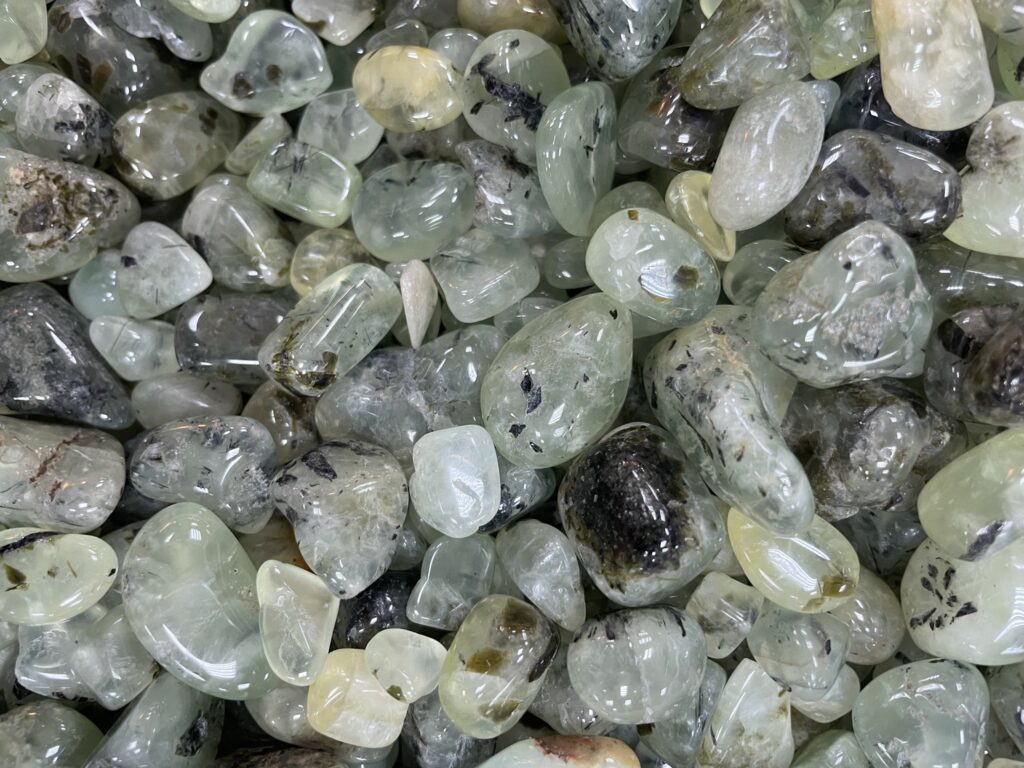
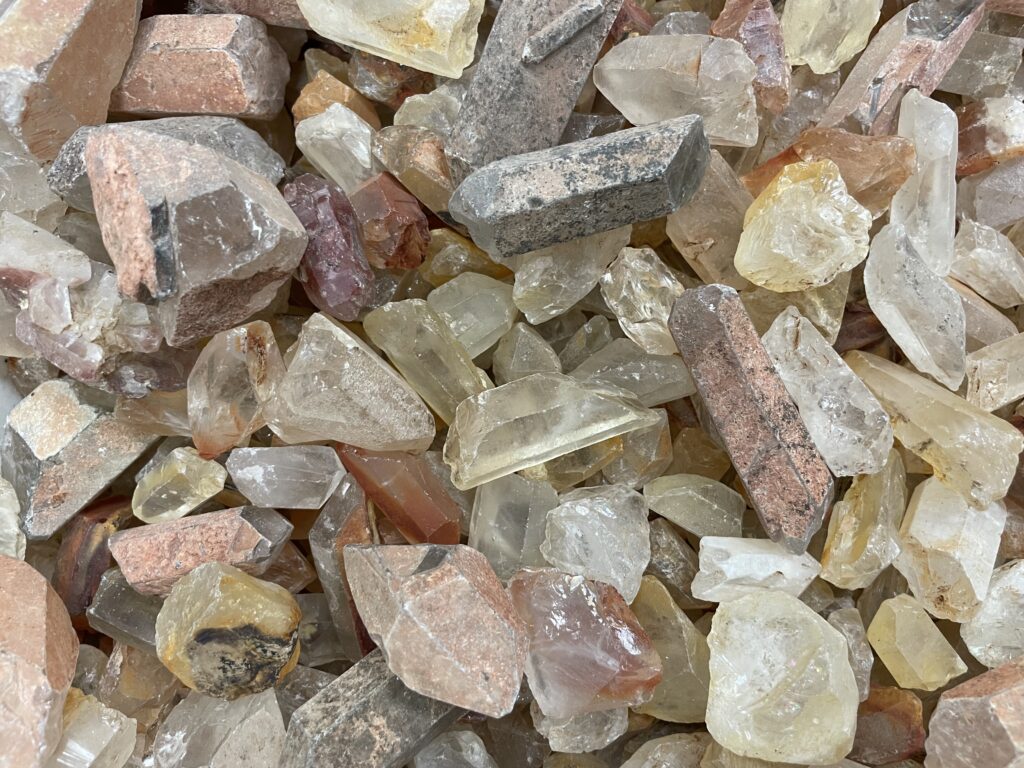
Apophyllite often forms in mineral-rich cavities within volcanic rocks, where it may occur alongside calcite, stilbite, prehnite, and other secondary minerals. Explore related minerals that can appear in similar natural formation settings.
Explore Related Crystals
Share this guide
Common variations of Apophyllite
Clear Apophyllite is the most common form of Apophyllite and is known for its clear to translucent crystals, known for its clarity and its interaction with light. Clear Apophyllite often forms in well-defined pyramidal or tabular crystals. It is associated with mental clarity, insight, and spiritual connection. Resonating with the crown chakra, it facilitates a strong connection to higher consciousness and spiritual realms. Clear Apophyllite is used in meditation to deepen spiritual awareness and access spiritual guidance. It supports emotional healing, stress reduction, and tranquility. This crystal is prized for its enchanting appearance and its ability to amplify and transmit light, making it a valuable addition to collections and spiritual practices.
Chalcedony-Coated Apophyllite is a captivating variety of Apophyllite distinguished by its glossy and translucent layer of chalcedony that covers the crystal’s surface. This unique texture adds aesthetic appeal and depth to the crystal. Depending on the chalcedony’s color, specimens may showcase various shades and hues. Chalcedony’s inherent properties, such as emotional balance and inner peace, complement Apophyllite’s spiritual and healing qualities, making Chalcedony-Coated Apophyllite a prized addition to crystal collections. Its harmonious blend of energies from both minerals enhances meditation and promotes tranquility.
Double-Terminated Apophyllite is a unique Apophyllite crystal variety known for its dual pointed terminations, the double termination signifies the crystal’s ability to transmit and receive energy in two directions simultaneously. This makes it a powerful tool for energy work, healing, and meditation. Some key aspects of Double-Terminated Apophyllite include: This crystal promotes balance, energy alignment, and enhanced energy flow within the body’s chakras and during group activities. It amplifies intentions, aids in meditation, and fosters spiritual connections with higher realms and inner wisdom. Double-Terminated Apophyllite is highly regarded for its harmonizing qualities in both personal and environmental energy spaces, making it a cherished tool for energy work, healing, and meditation.
Flower-Like Clusters of Apophyllite are exquisite natural formations characterized by a central core from which multiple pyramid-shaped Apophyllite crystals radiate in a symmetrical pattern, resembling the petals of a flower. These clusters are prized for their aesthetic beauty, symmetry, and the translucent quality of the individual crystals. Beyond their visual appeal, they hold metaphysical significance, associated with spiritual growth, energy purification, and emotional healing. Flower-Like Clusters are often used in meditation and holistic healing practices to enhance spiritual awareness and create a harmonious environment. They are not only decorative but also serve as sources of tranquility and balance.
Green Apophyllite is less common and a unique variety of Apophyllite known for its vibrant green color, ranging from pale to deep shades. It is prized for its associations with growth, vitality, and renewal, resonating strongly with the heart chakra. This crystal is utilized for emotional healing, stress reduction, and promoting a sense of tranquility. Green Apophyllite’s soothing energy is also linked to physical vitality, and it is used in meditation to connect with the natural world. Collectors appreciate its aesthetic beauty and its potential to bring harmony to one’s environment.
Phantom Apophyllite is a remarkable variety of Apophyllite known for its intriguing internal structure. What sets it apart is the presence of a visible “phantom” or ghost-like outline of an earlier crystal growth stage within the crystal itself. This phantom can be seen as a translucent or faintly colored shadow or silhouette inside the clear or translucent Apophyllite crystal.
The phantom formation occurs when the crystal’s growth is temporarily interrupted, often due to changes in environmental conditions or the availability of mineral-forming elements. During this interruption, a layer of other minerals or material can settle on the existing crystal surface. When growth resumes, the new layers may encase the earlier crystal, leaving behind a “phantom” of its original shape.
Phantom Apophyllite specimens are highly sought after by crystal collectors and enthusiasts due to their visual appeal and the fascinating story they tell of their geological history. These phantoms add a layer of mystique and wonder to Apophyllite crystals, making them prized additions to crystal collections. They are appreciated not only for their aesthetic beauty but also for their metaphysical properties, which combine the energy of both the phantom and Apophyllite itself.
In metaphysical and spiritual practices, Phantom Apophyllite is believed to symbolize growth, transformation, and the ability to overcome obstacles from the past. It is often used as a tool for introspection and personal development, as well as for enhancing spiritual awareness and connecting with higher consciousness.
Pink Apophyllite is a distinct variety of Apophyllite known for its gentle pink coloration, ranging from pale pink to rosy hues, it is considered relatively rare compared to other colors of Apophyllite. Prized for its emotional healing properties, promoting love, compassion, and self-acceptance. Pink Apophyllite resonates with the heart chakra, facilitating emotional balance and reducing stress and anxiety. It is used in meditation for self-love and inner exploration, fostering spiritual growth and personal transformation.
Stilbite-Included Apophyllite is a captivating variety of Apophyllite that features delicate stilbite inclusions within its crystal structure. These inclusions, often in peach to pink hues, create a visually striking contrast with the clear to translucent Apophyllite. This crystal is prized for its harmonious combination of qualities, including emotional healing, heart-centered energy, and enhanced spiritual awareness. Stilbite-Included Apophyllite is associated with the heart chakra, making it valuable for inner work, meditation, and promoting emotional balance. It is admired for its aesthetic beauty and is used both decoratively and for its metaphysical properties, fostering tranquility and well-being.