Agate is known for its beautiful patterns, natural banding, and steady grounding energy. Associated with balance, harmony, and resilience, this versatile stone has been valued for centuries in jewelry, decorative objects, and spiritual practices. Whether used for protection, creativity, or emotional stability, agate offers a calm and supportive presence.
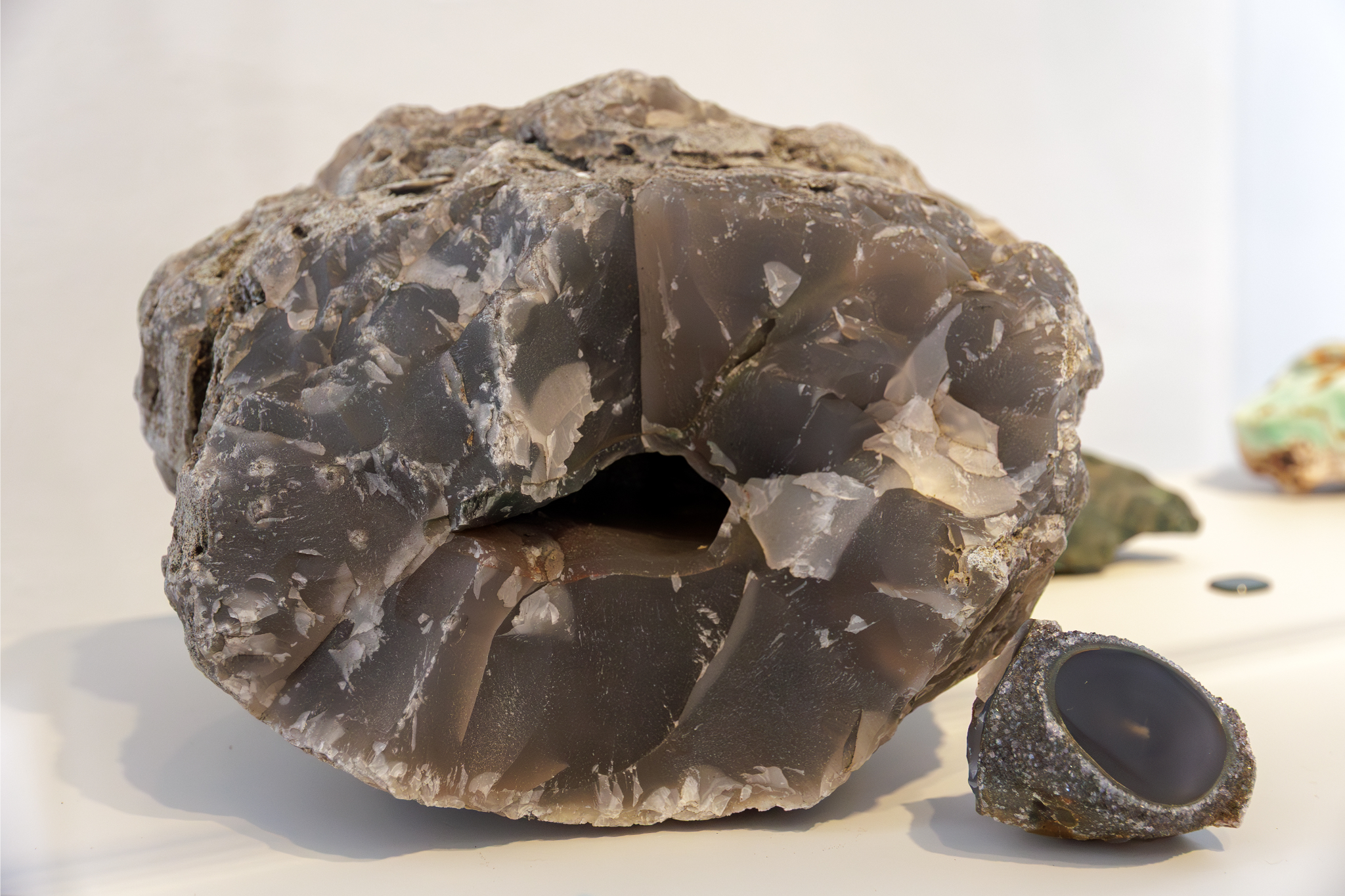
Formed over extended geological timescales, agate develops when silica-rich fluids enter cavities and cracks within rocks, often in volcanic or sedimentary environments. Over time, dissolved silica gradually settles and crystallizes as microcrystalline quartz, also known as chalcedony. The distinctive bands and patterns develop as layers of silica and trace minerals are deposited one after another. Variations in color and pattern are influenced by mineral impurities, changing conditions, and the composition of the surrounding rock. Eventually, agates are exposed through natural weathering and erosion.
Colors
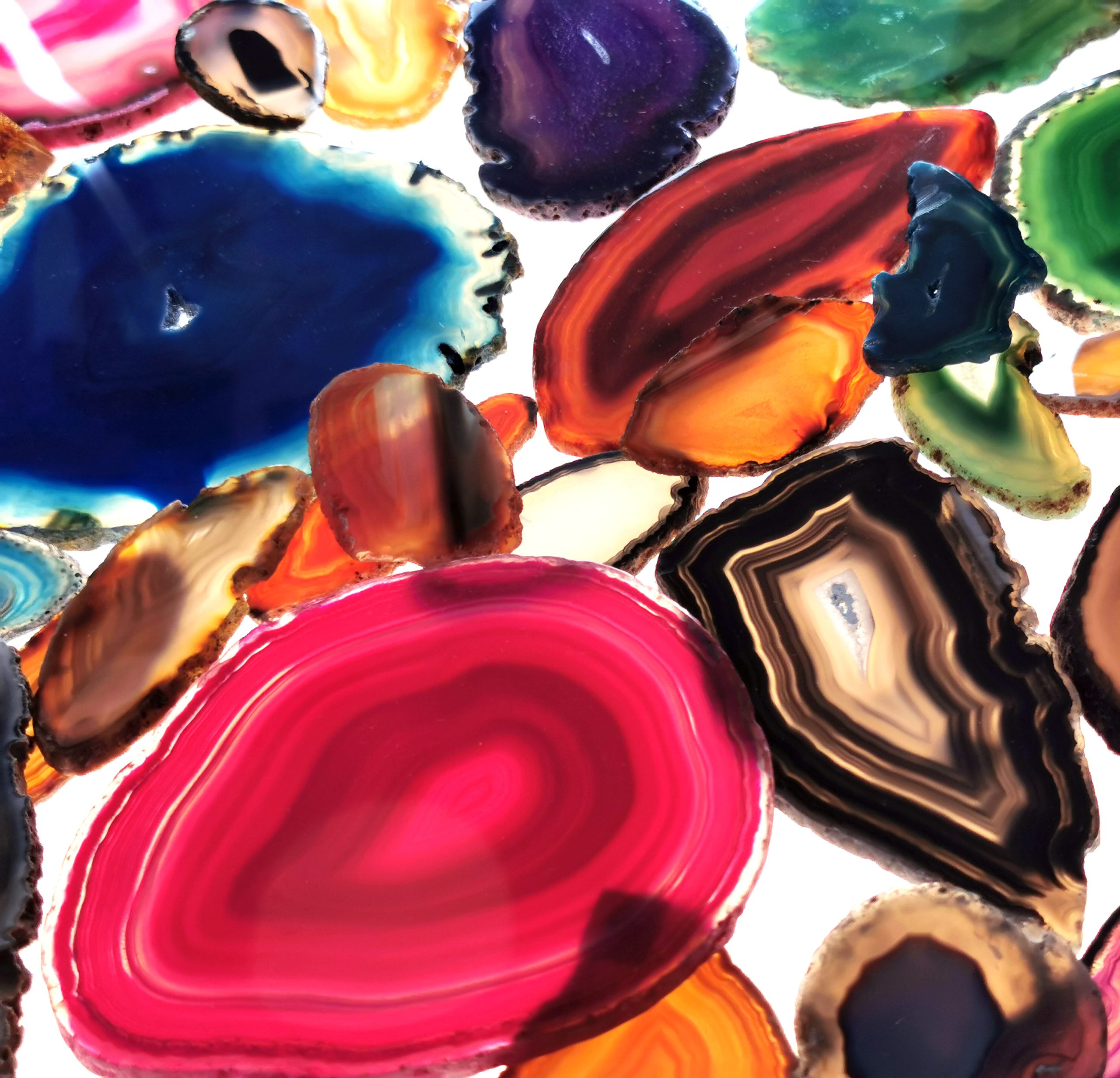
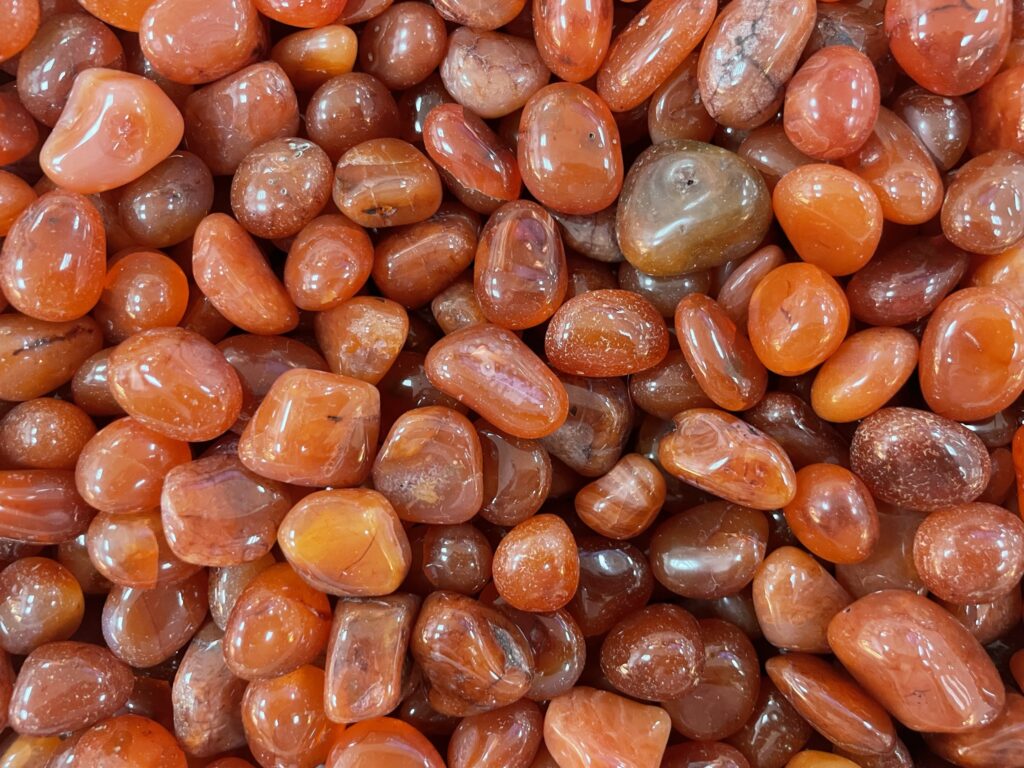
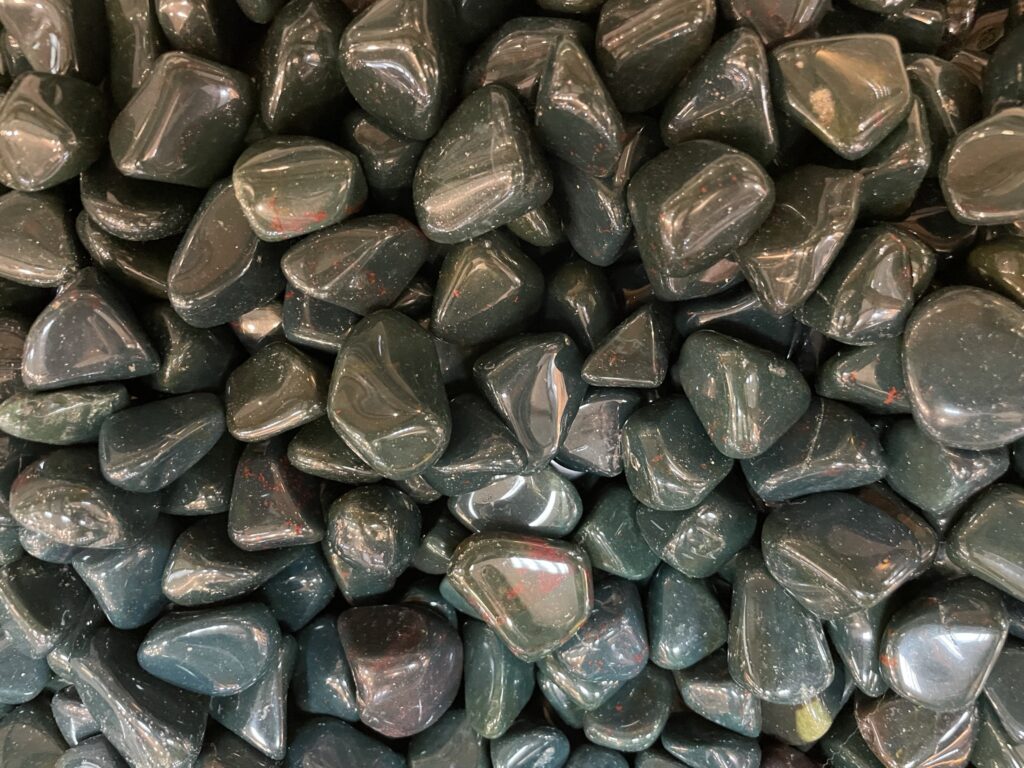
Known for its layered bands and wide range of colors, agate can display earthy reds, browns, yellows, grays, whites, blues, greens, pinks, and purples. In its natural form, it often develops inside rock cavities or rounded nodules, where its inner beauty is revealed only after the stone is cut or polished. Its colors and patterns are influenced by trace minerals, impurities, and changes in the silica-rich solutions that form each layer. Elements such as iron and manganese can contribute to earthy reds, browns, yellows, and darker tones, while variations in mineral content create the diverse patterns seen in agate. Vivid green, blue, pink, and purple agates are often dyed to enhance or create their bright colors.
Origin
Agate can be found in many parts of the world. Different locations can produce specimens with distinctive colors, banding, and patterns, depending on the geological conditions and mineral content of the surrounding rock.
Some of the major sources include Brazil, Uruguay, Mexico, and the United States. In Brazil, agate is especially associated with Rio Grande do Sul, where it is known for colorful banding and large geode formations. Uruguay is well known for agate and amethyst geodes, which are often used as decorative pieces. Mexico is another important source, particularly for Laguna Agate from Chihuahua, valued for its vivid colors and intricate patterns. In the United States, agate can be found in several states, including Oregon, Montana, Arizona, and the Lake Superior region.
History
The name “agate” is believed to come from the Achates River, now known as the Dirillo River, in Sicily, Italy, where agate was known in ancient times. This connection gave the stone its historical name and helped establish its place among the earliest decorative gemstones.
Agate has been valued for thousands of years for its beauty, durability, and distinctive banded patterns. Ancient Egyptians carved it into jewelry, seals, and amulets, while Greek and Roman artisans used agate for cameos, decorative objects, and engraved pieces. During the medieval period, agate was commonly used in talismans and amulets and was traditionally associated with protection and strength.
Across different cultures, including some Islamic and Asian traditions, agate has also been used for prayer beads, symbolic objects, and protective ornaments. Today, agate remains popular in jewelry, home decor, and interior design, while its layered formation continues to interest mineral collectors and geologists.
Spiritual & Emotional Properties
Agate is traditionally associated with balance, grounding, protection, and emotional stability. Its steady energy is often linked with calmness, inner strength, and a deeper sense of harmony. Because agate appears in many colors and varieties, its specific associations may vary by type, but its overall symbolism is most often connected to stability, protection, and centered energy.
Balance & Harmony
Encourages a calm, centered feeling and supports a sense of inner balance.
Grounding
Helps create a steady, rooted energy that feels stable and present.
Protection
Traditionally used as a protective stone for energetic steadiness and inner security.
Emotional Stability
Supports patience, calm responses, and a more balanced emotional state.
Focus & Clarity
Brings a steady quality that can support concentration, clear thinking, and thoughtful choices.
Inner Strength
Linked with quiet confidence, resilience, courage, and self-trust.
Traditional Wellness Associations
Disclaimer: The following information is based on traditional crystal practices and metaphysical associations. It is not medical advice, diagnosis, or treatment, and should not replace professional healthcare. Crystals may be used as a symbolic or complementary support practice, but they should never be used as a substitute for medical care.
Digestive & Stomach Support
In traditional crystal practices, agate is often associated with digestive balance and stomach comfort. It has been symbolically linked with supporting a calmer, steadier physical state.
Circulation & Blood Flow
Agate is traditionally connected with circulation, vitality, and steady energy flow. These associations are symbolic and are often used to represent physical balance and overall well-being.
Skin Support
Agate has also been associated with skin wellness in traditional crystal beliefs. Rather than being viewed as a treatment, it is best understood as a symbolic stone for balance, renewal, and supportive self-care.
Immune System & Vitality
In metaphysical traditions, agate is often linked with vitality, resilience, and general well-being. It is commonly used as a grounding stone that represents steadiness, strength, and supportive energy.
How to Use Agate
Daily Carry
Keep agate in your pocket or bag as a small reminder of calm, balance, and steady energy.
Jewelry
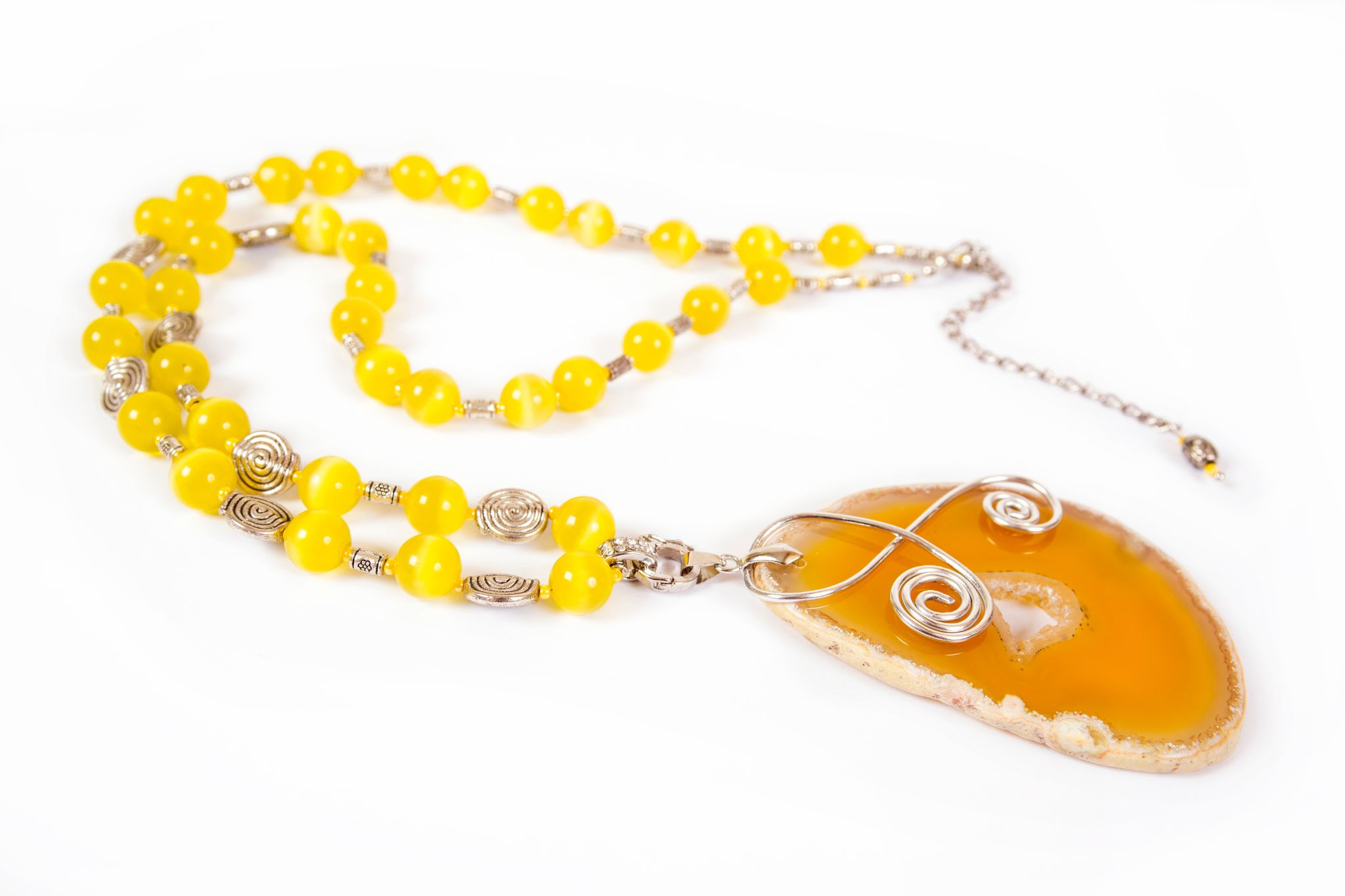
Wear agate as jewelry; its durability, 6.5–7 on the Mohs scale, and unique swirling patterns make it ideal for everyday wear.
Meditation
Hold agate during meditation to encourage presence, patience, and emotional steadiness.
Home Decor
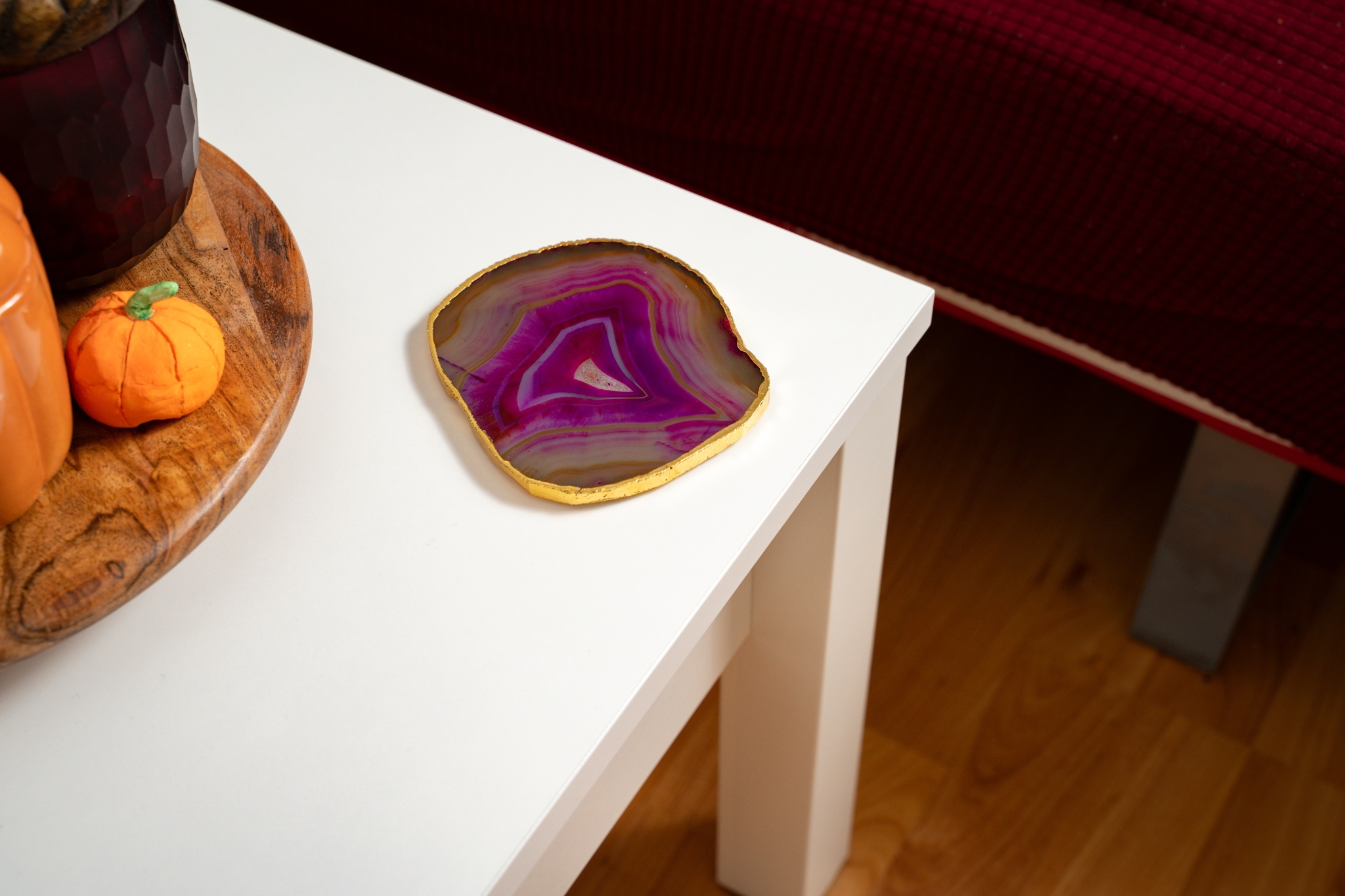
Display agate in your home or workspace to add natural beauty and a peaceful, grounded feel.
Crystal Grid
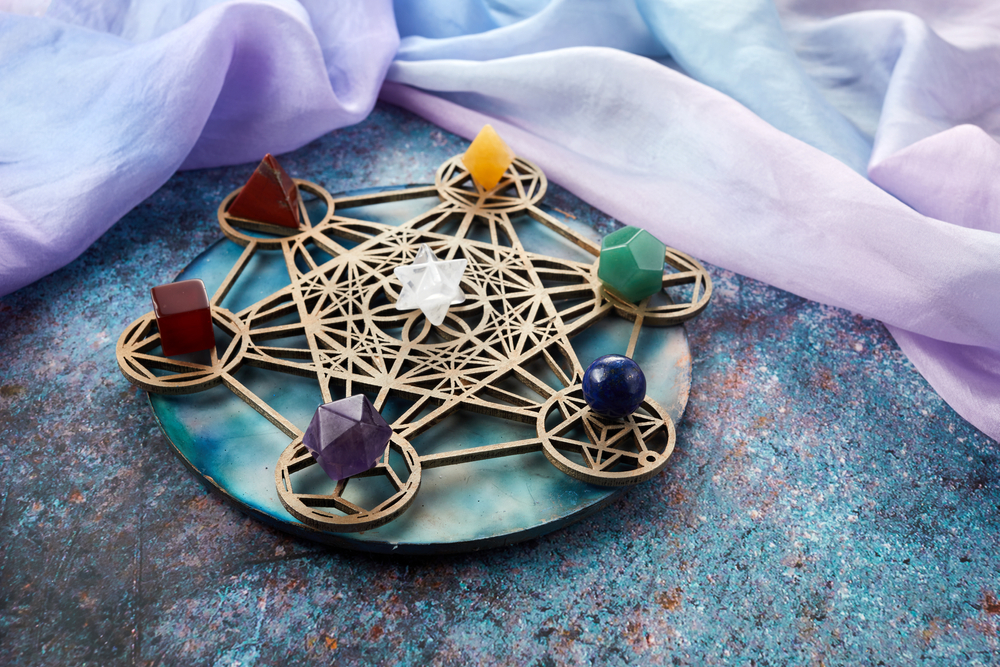
Use agate in crystal grids for intentions related to protection, stability, and inner balance.
Intention Setting
Use agate while setting intentions to bring a grounded, steady focus to personal goals.
Cleansing & Care for Agate
Agate is a durable variety of chalcedony, with a Mohs hardness of about 6.5–7. Gentle care helps preserve its polish, banding, and natural or enhanced color.
Physical Care:
Wipe with a soft dry or slightly damp cloth. If needed, use mild soap and room-temperature water, then dry the stone carefully.
Avoid:
Harsh chemicals, perfumes, saltwater, prolonged soaking, abrasive cleaners, ultrasonic cleaners, and extended direct sunlight. Dyed or brightly colored agates should be kept away from strong sunlight, as color may fade or lose intensity over time.
Energetic Cleansing & Charging:
Use smoke, sound, selenite, or clear quartz to energetically cleanse agate. To recharge it, place it under soft moonlight or near selenite or clear quartz.
Types of Agate
Agate Geode
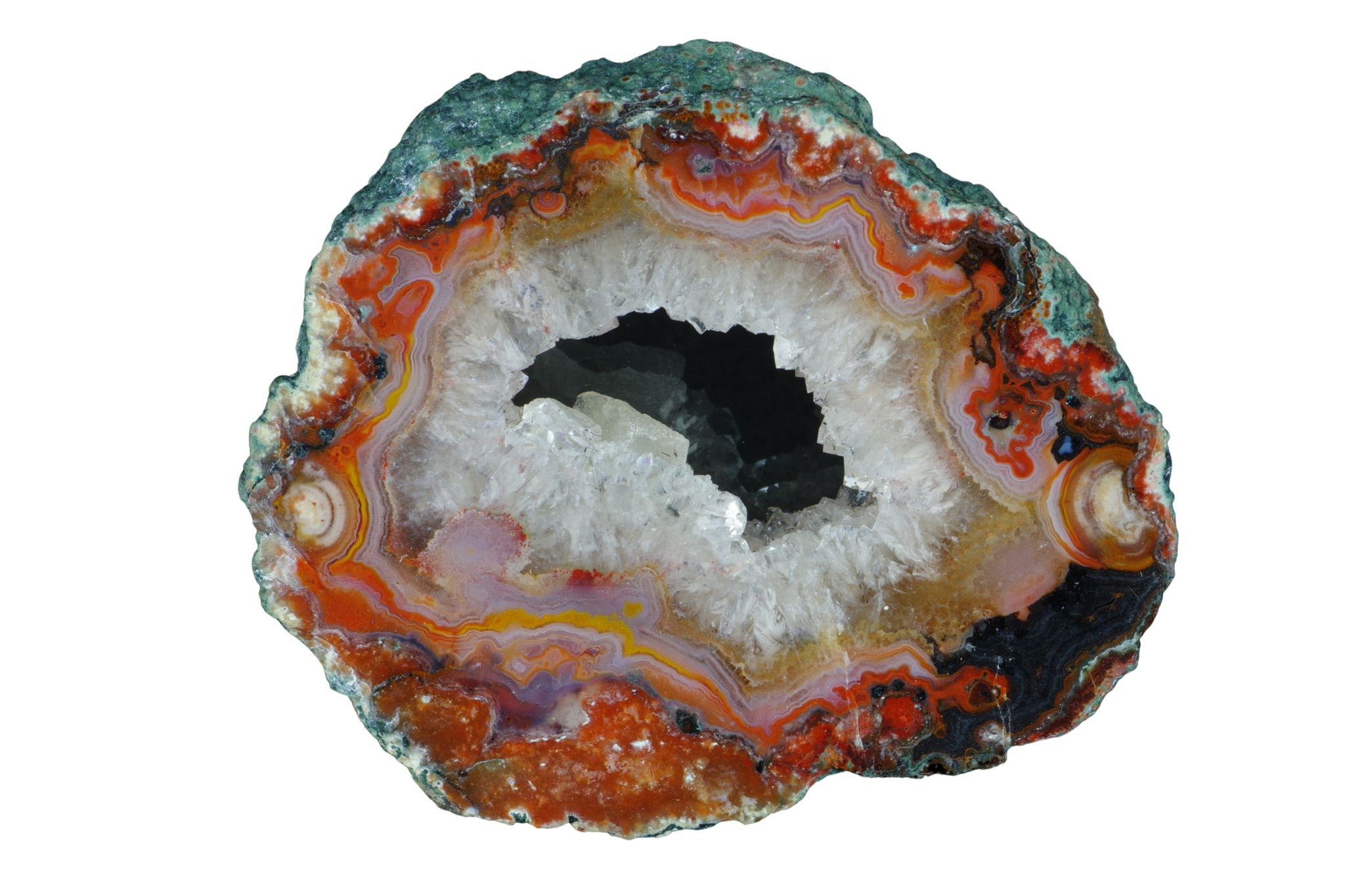
A hollow agate formation with layered chalcedony and, in some cases, sparkling quartz crystals inside.
Origin: Brazil, Uruguay, Mexico, United States Energy: Protection, stability, inner grounding Chakra: Root
Banded Agate
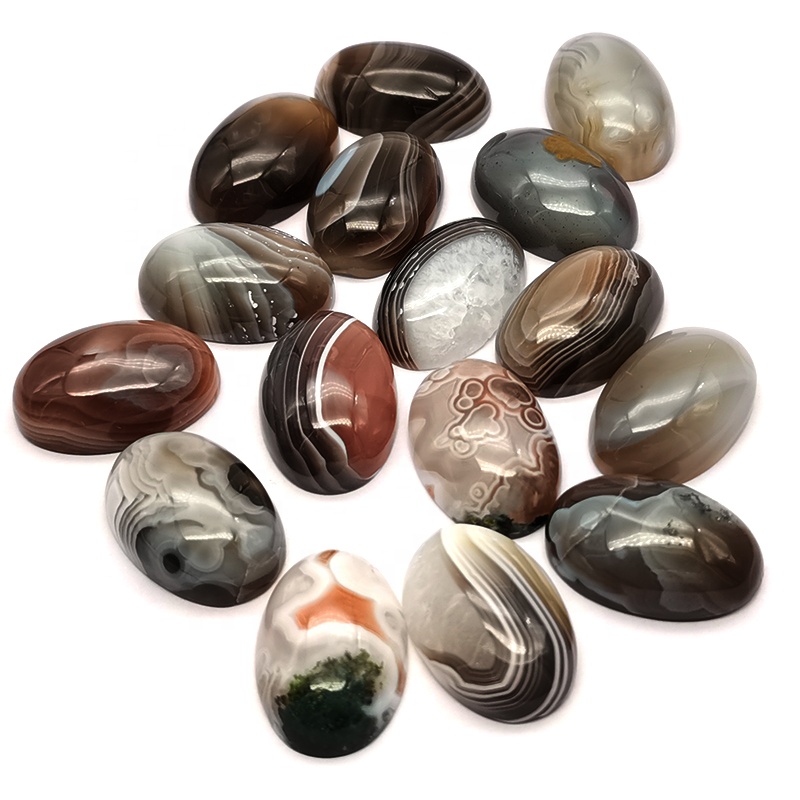
A classic form of agate known for its distinct layered bands in natural tones of gray, brown, white, cream, and red.
Origin: Brazil, Uruguay, India, United States Energy: Balance, grounding, emotional steadiness Chakra: Root
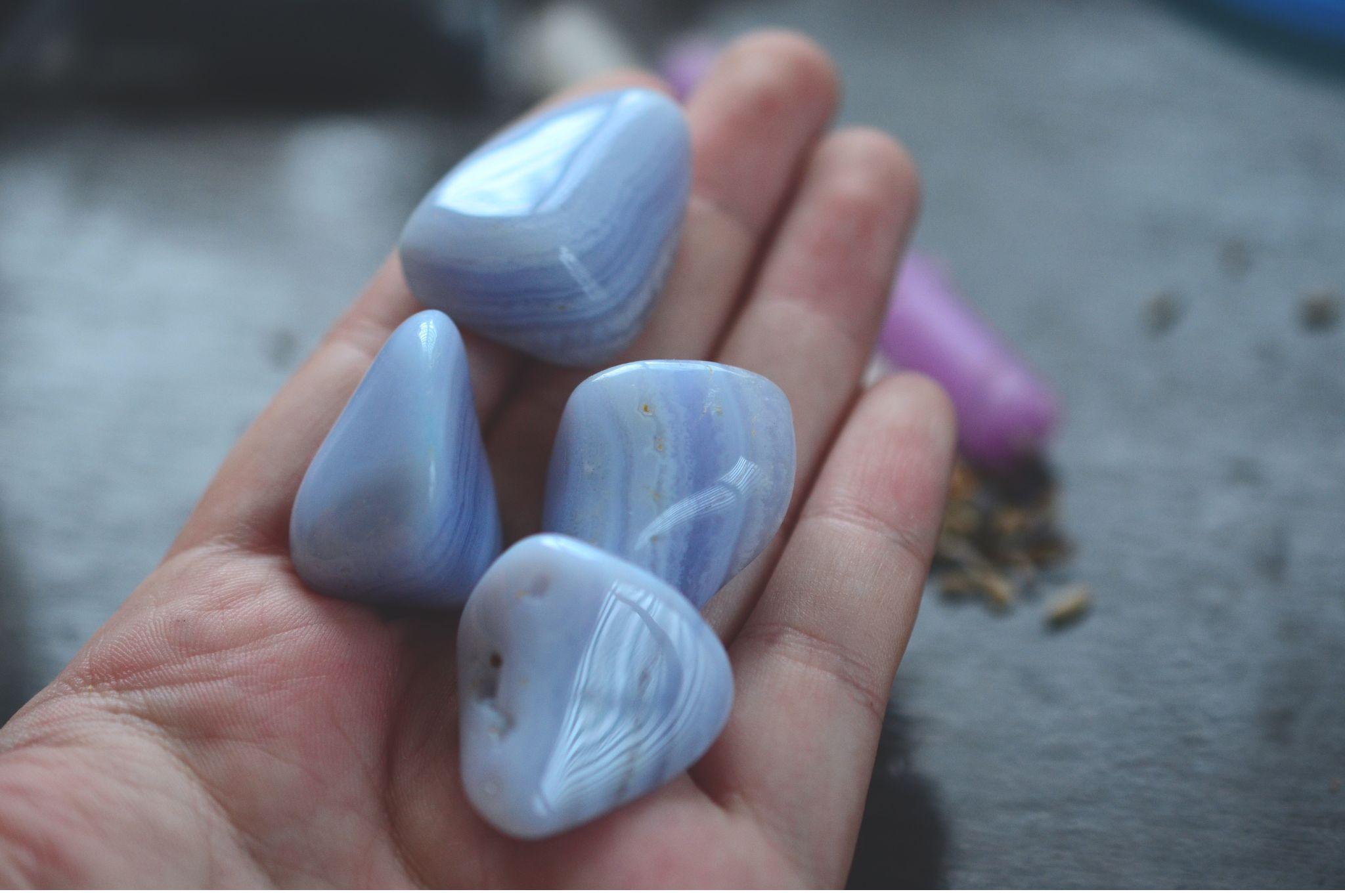
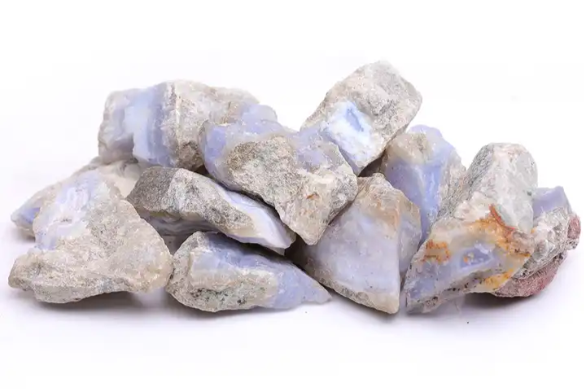
Blue Lace Agate
A pale blue agate with soft white, lace-like banding, traditionally associated with calm communication and gentle self-expression.
Origin: Southern Africa, especially Namibia and South Africa Energy: Calm communication, emotional soothing Chakra: Throat
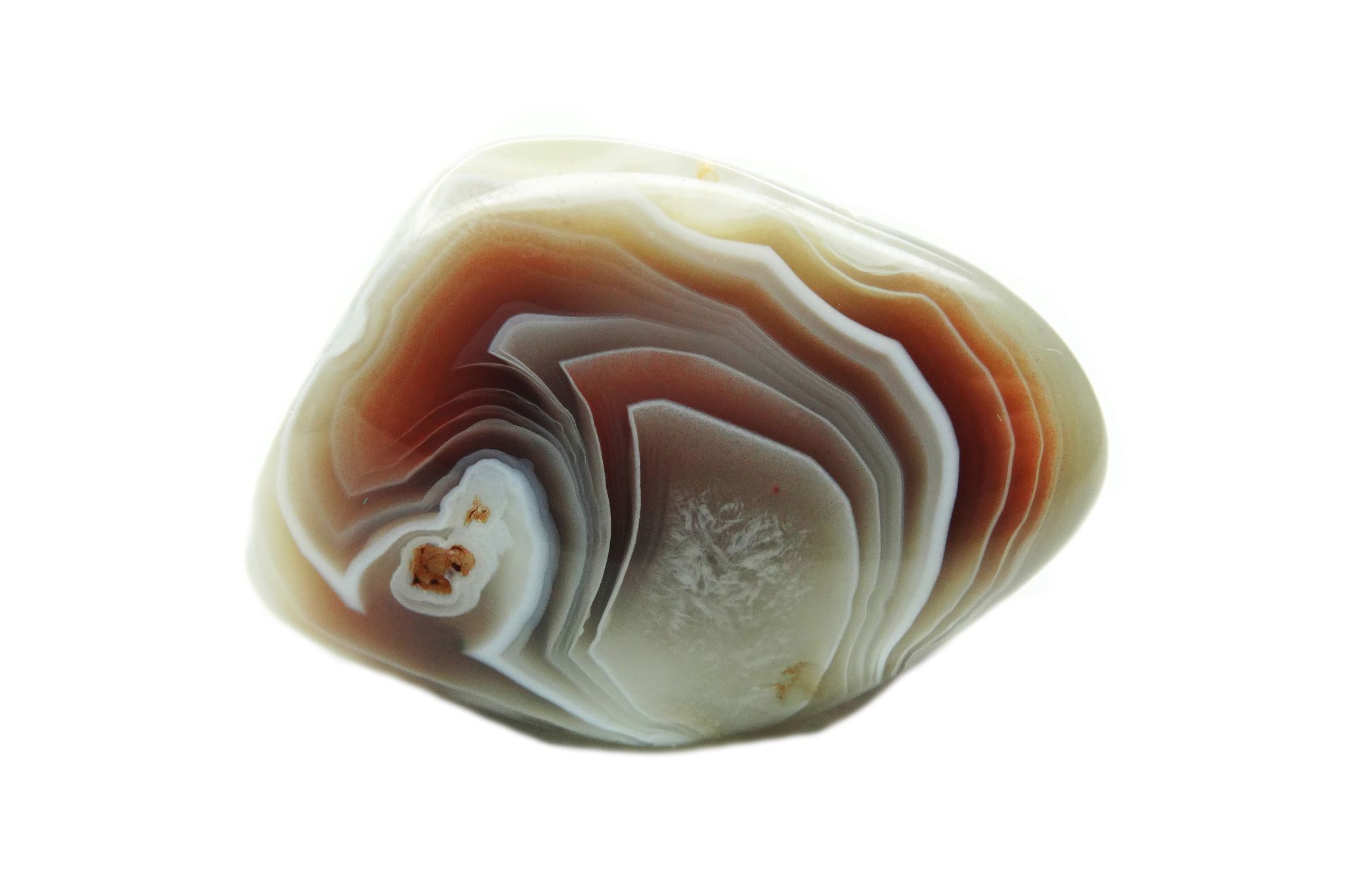
Botswana Agate
A finely banded agate known for soft earthy tones of gray, white, cream, brown, and pinkish hues.
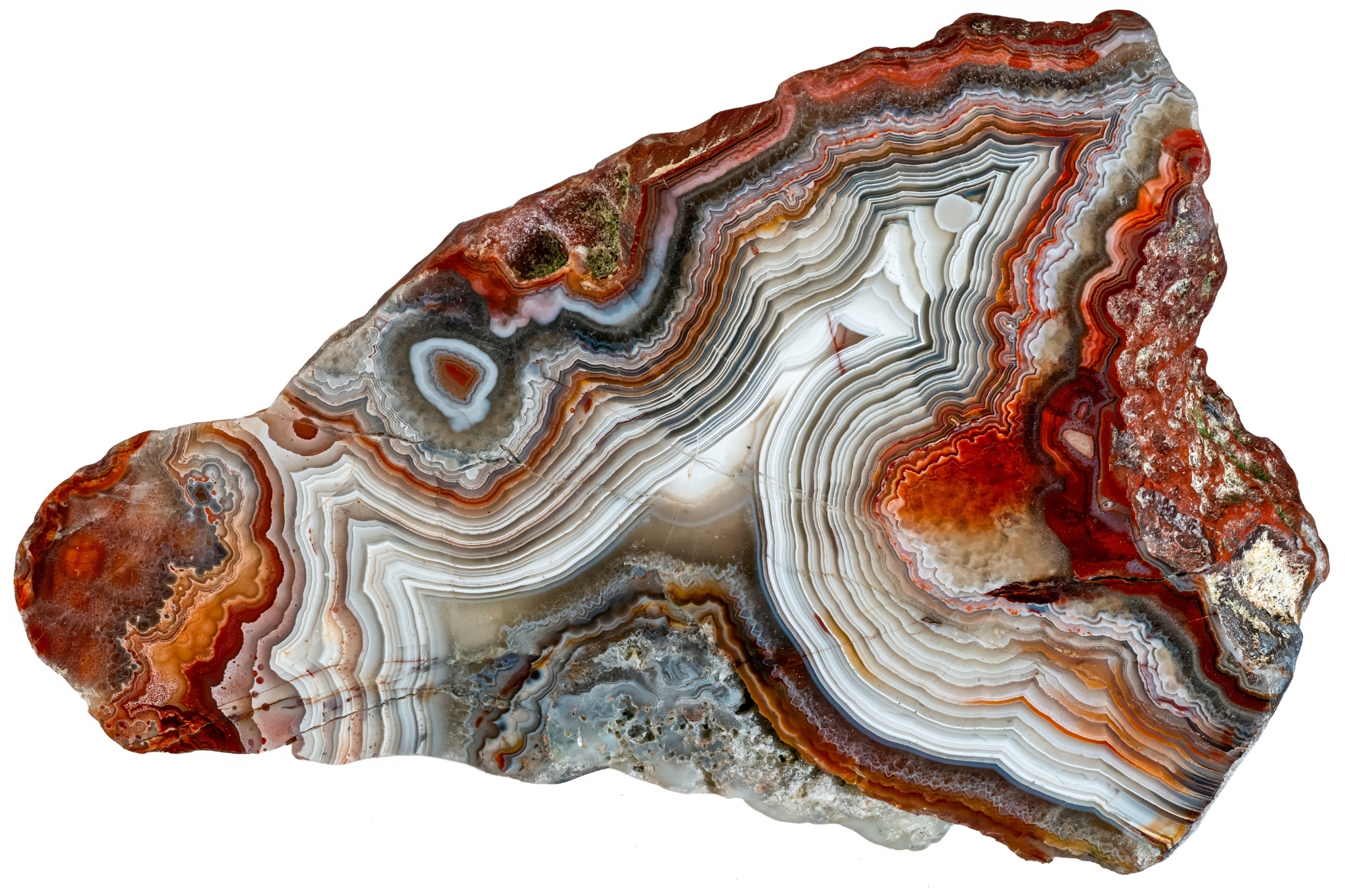
A lively Mexican agate with swirling, lace-like bands in cream, gray, yellow, orange, red, and brown tones.
Origin: Mexico Energy: Joy, resilience, optimism, balance Chakra: Solar Plexus
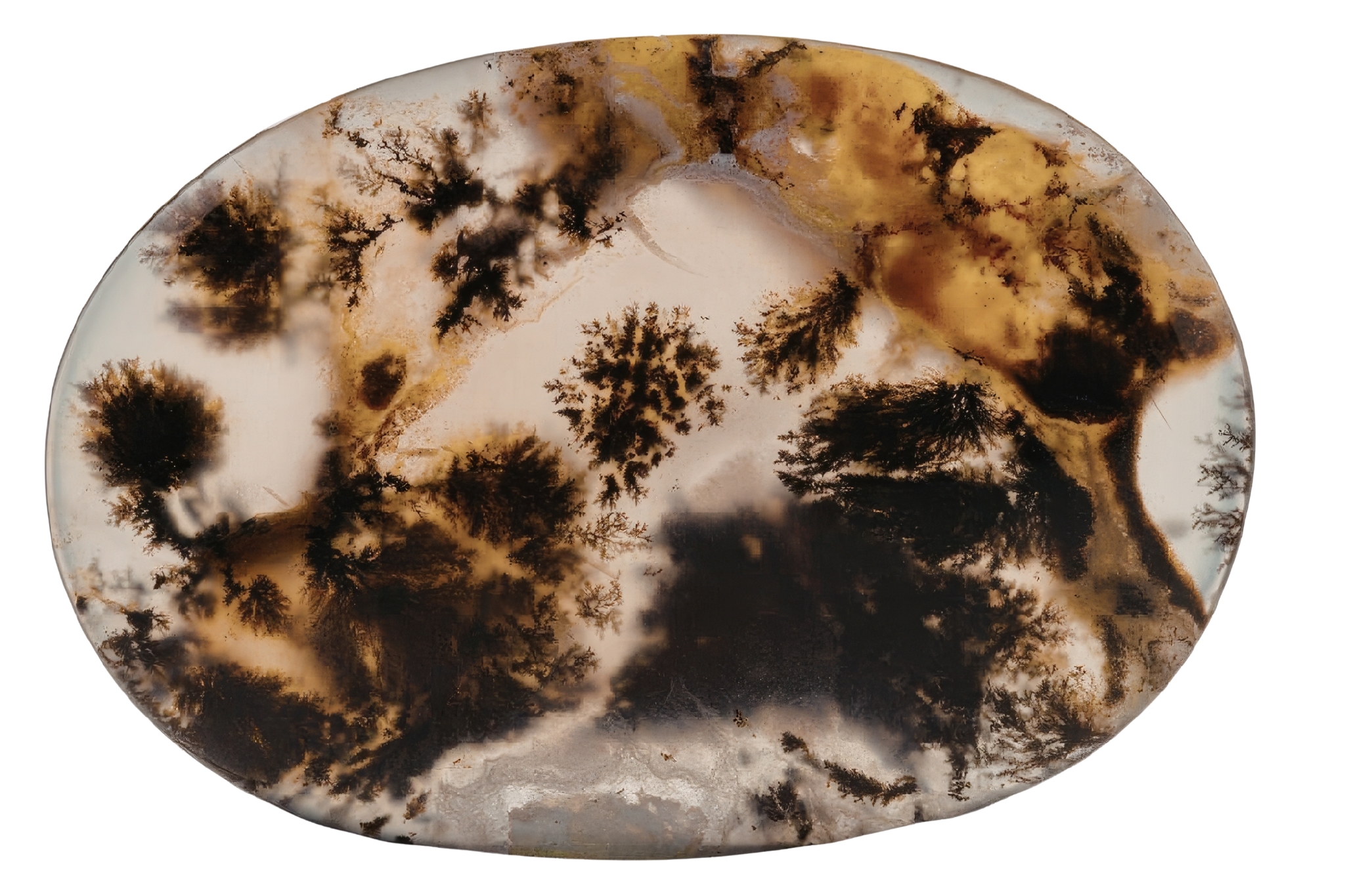
Dendritic Agate
A translucent to milky agate with natural branch-like mineral inclusions that resemble trees, ferns, or miniature landscapes.
Origin: India, Brazil, United States, Madagascar Energy: Growth, patience, connection to nature Chakra: Heart
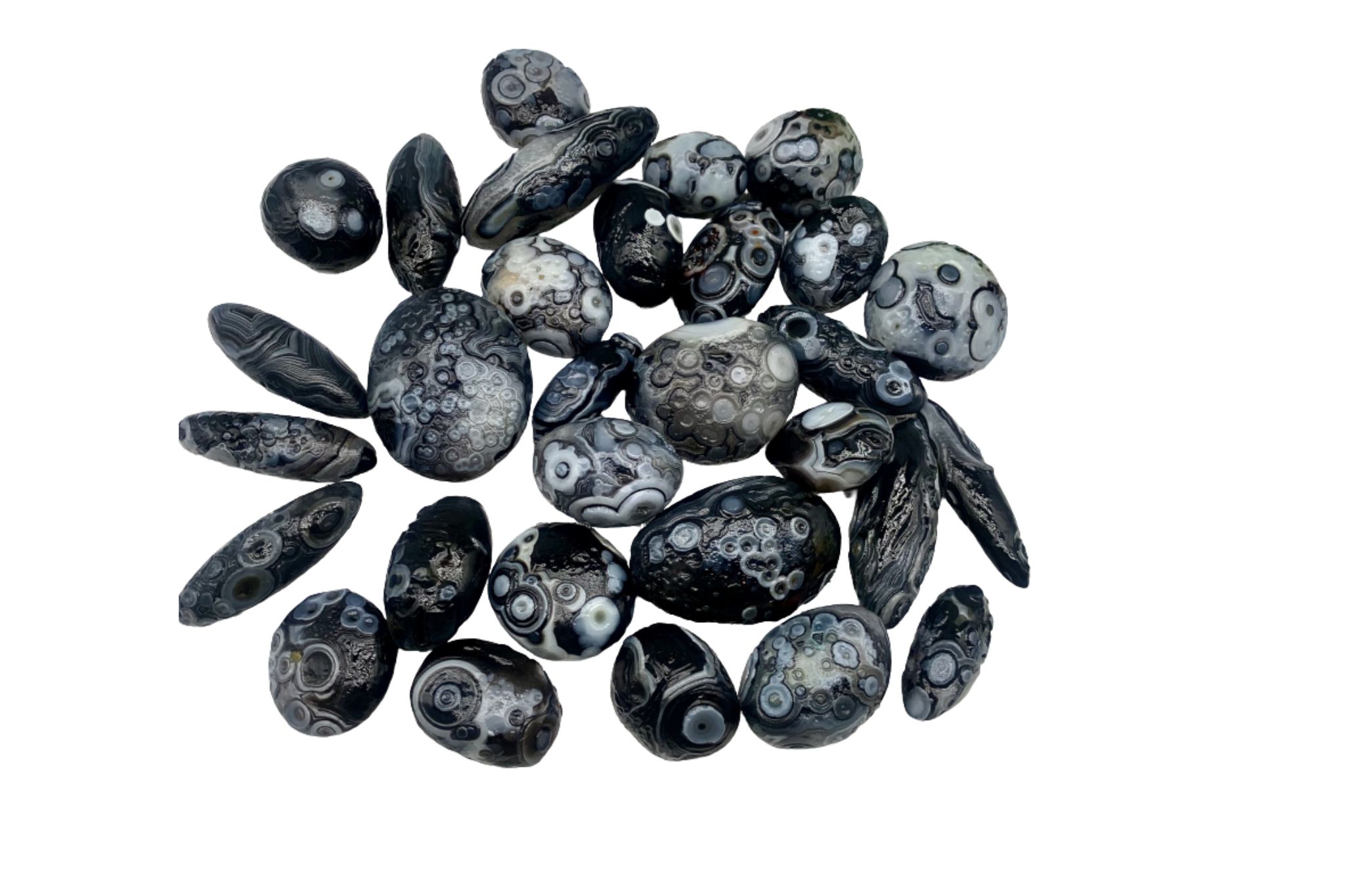
Eye Agate
An agate variety recognized by circular, eye-like banding patterns, often associated with protection and awareness.
Origin: India, Brazil, Mexico, United States Energy: Protection, awareness, inner security Chakra: Third Eye
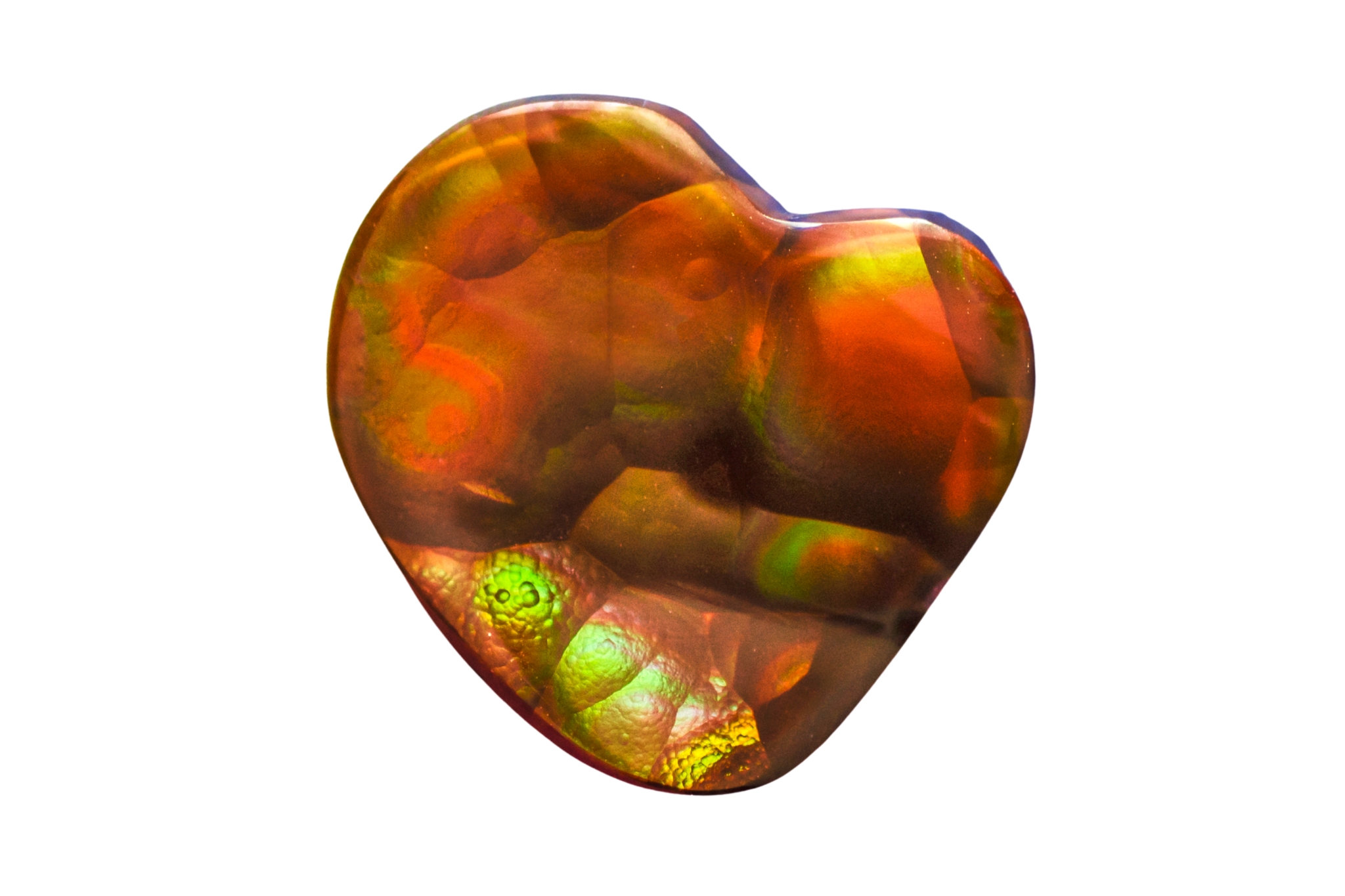
Fire Agate
A rare chalcedony variety known for fiery iridescent flashes of orange, red, gold, green, and brown beneath the surface.
Origin: Mexico and the southwestern United States Energy: Courage, vitality, protection Chakra: Root and Sacral
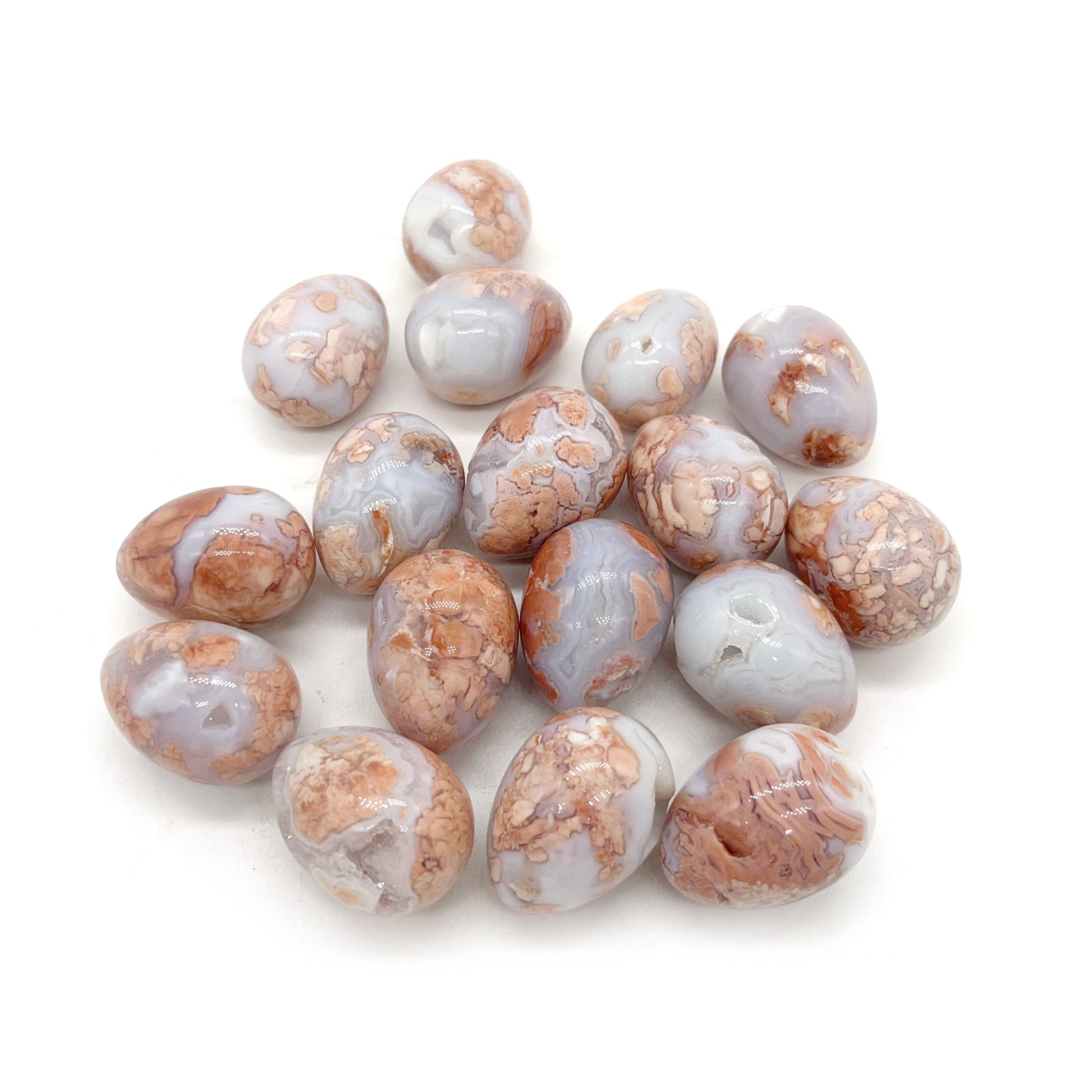
Flower Agate
A soft pink to peach agate with floral-like patterns that often resemble blossoms or blooming flowers.
Origin: Madagascar Energy: Growth, new beginnings, emotional healing Chakra: Heart
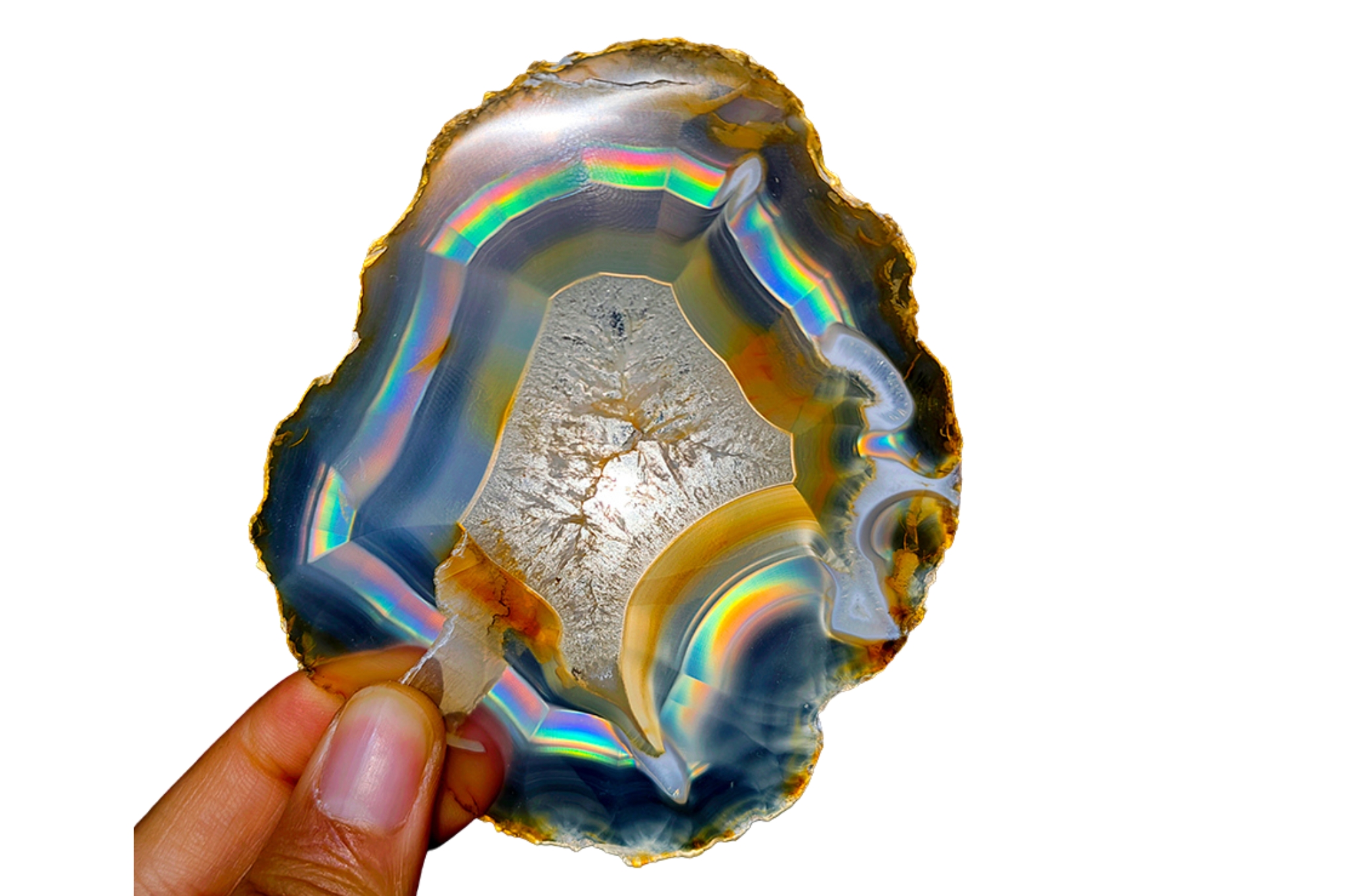
Iris Agate
A thinly sliced agate that reveals rainbow-like colors when light passes through its fine internal bands.
Origin: Mexico, Brazil, United States Energy: Clarity, perspective, inner balance Chakra: Crown
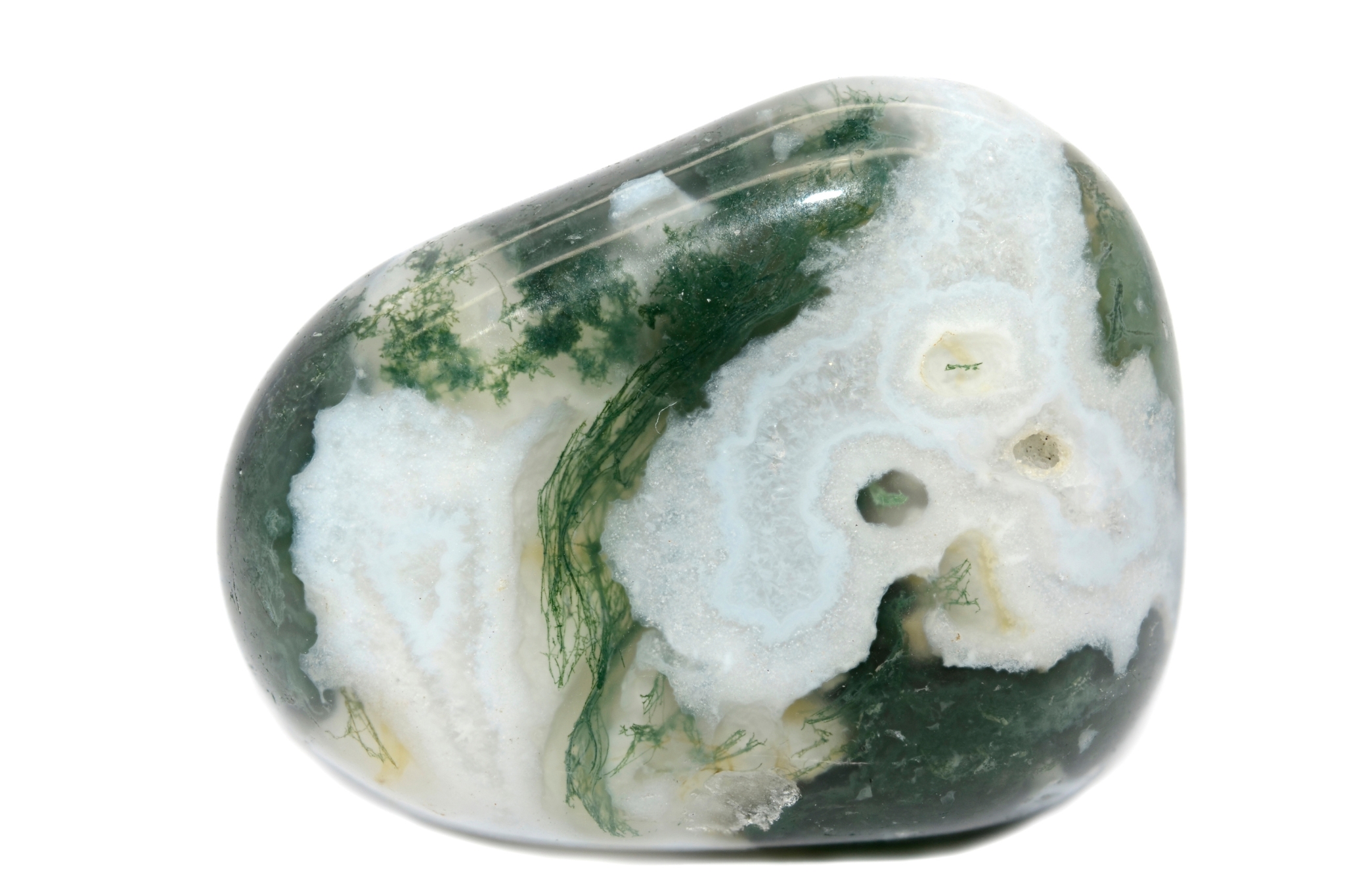
Moss Agate
A translucent to milky chalcedony with green moss-like inclusions that resemble natural landscapes or plant growth.
Origin: India, Brazil, United States, Australia Energy: Abundance, renewal, grounding, nature connection Chakra: Heart
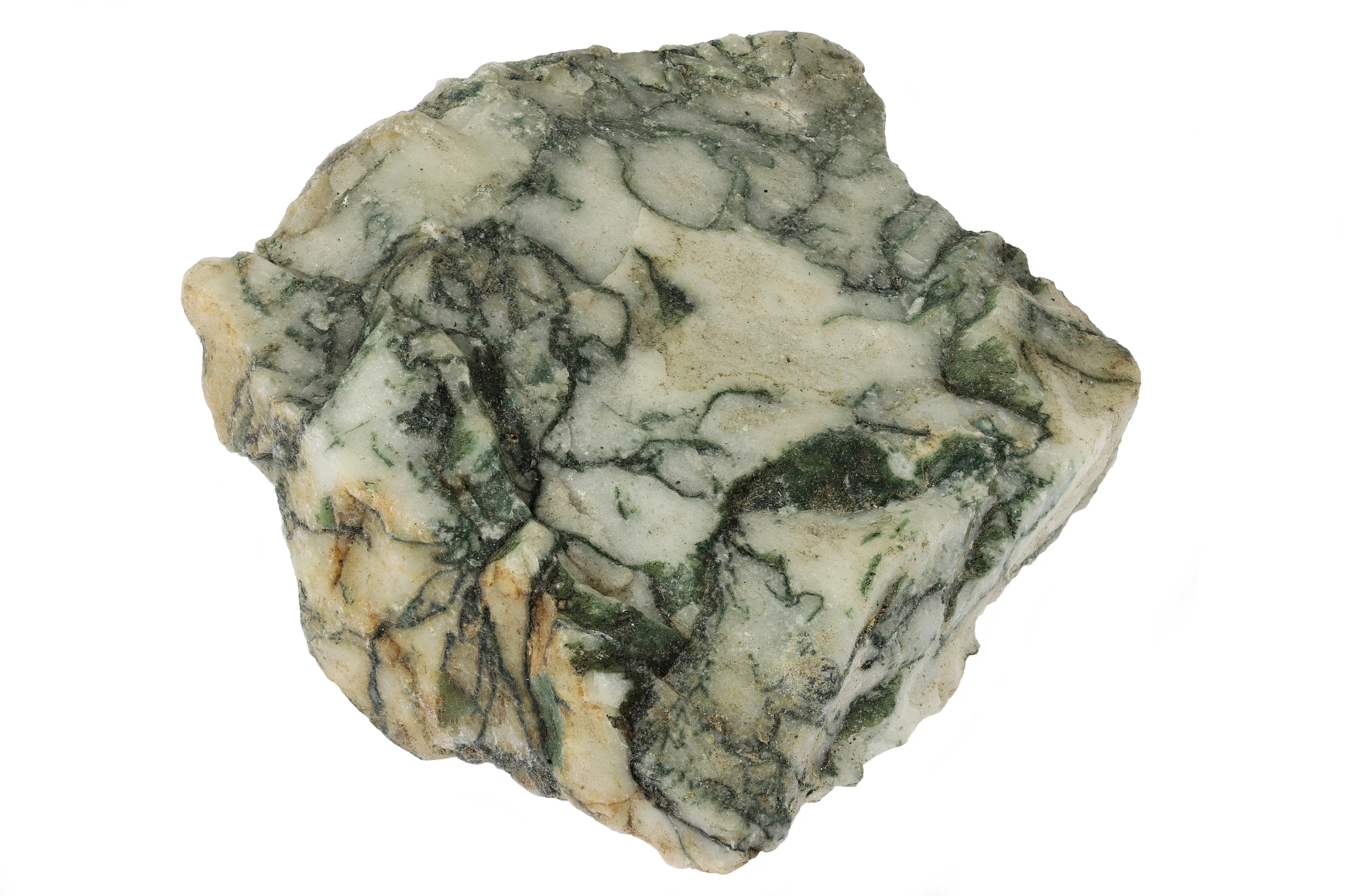
Tree Agate
A white or milky chalcedony with green branching inclusions that resemble trees, roots, or natural plant forms.
Origin: India, Brazil, United States Energy: Stability, patience, growth, calm Chakra: Heart and Root
Agate is a banded variety of chalcedony, part of the wider quartz family. Explore related chalcedony and quartz-based crystals that share a similar mineral foundation, each with its own color, texture, and energetic character.