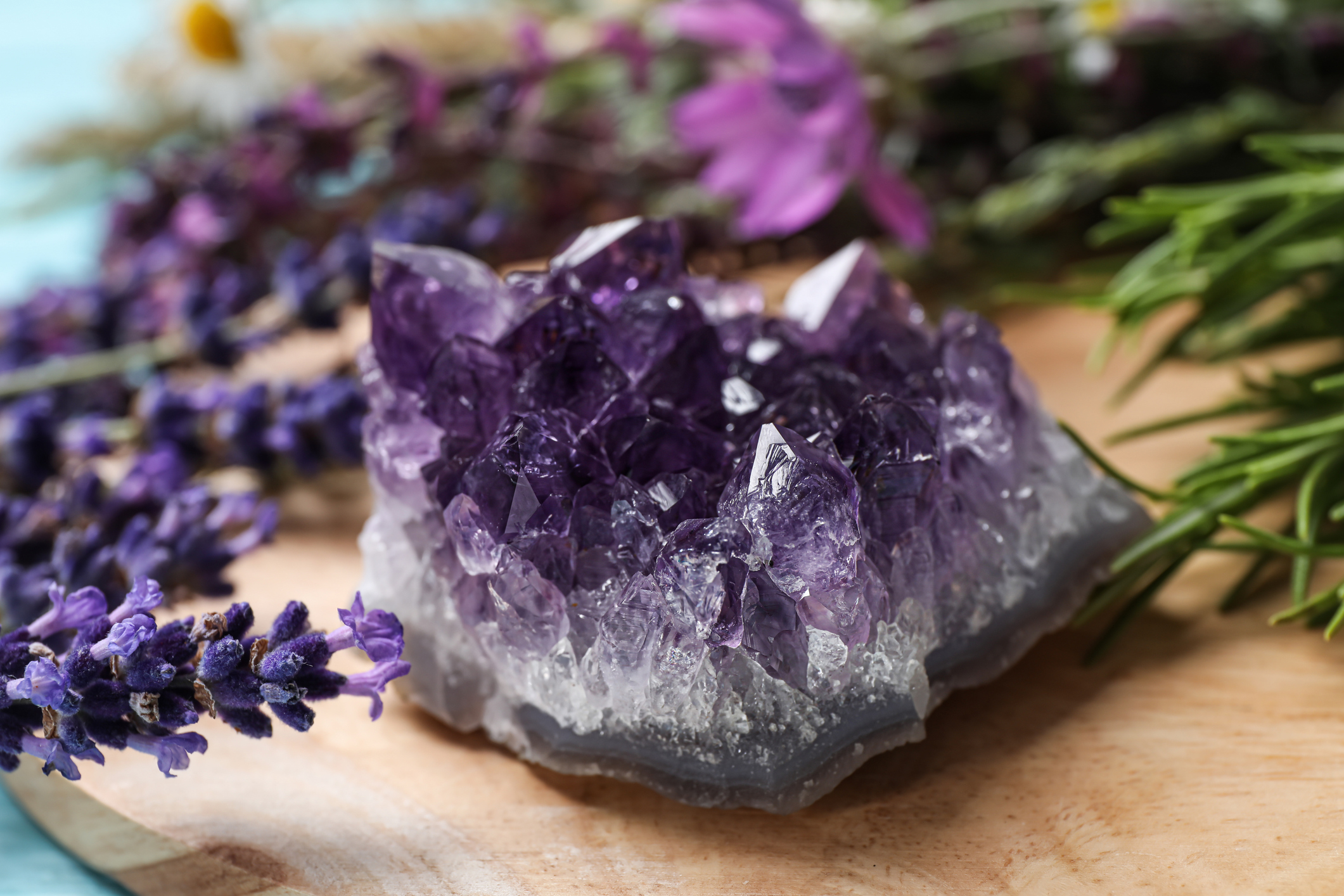
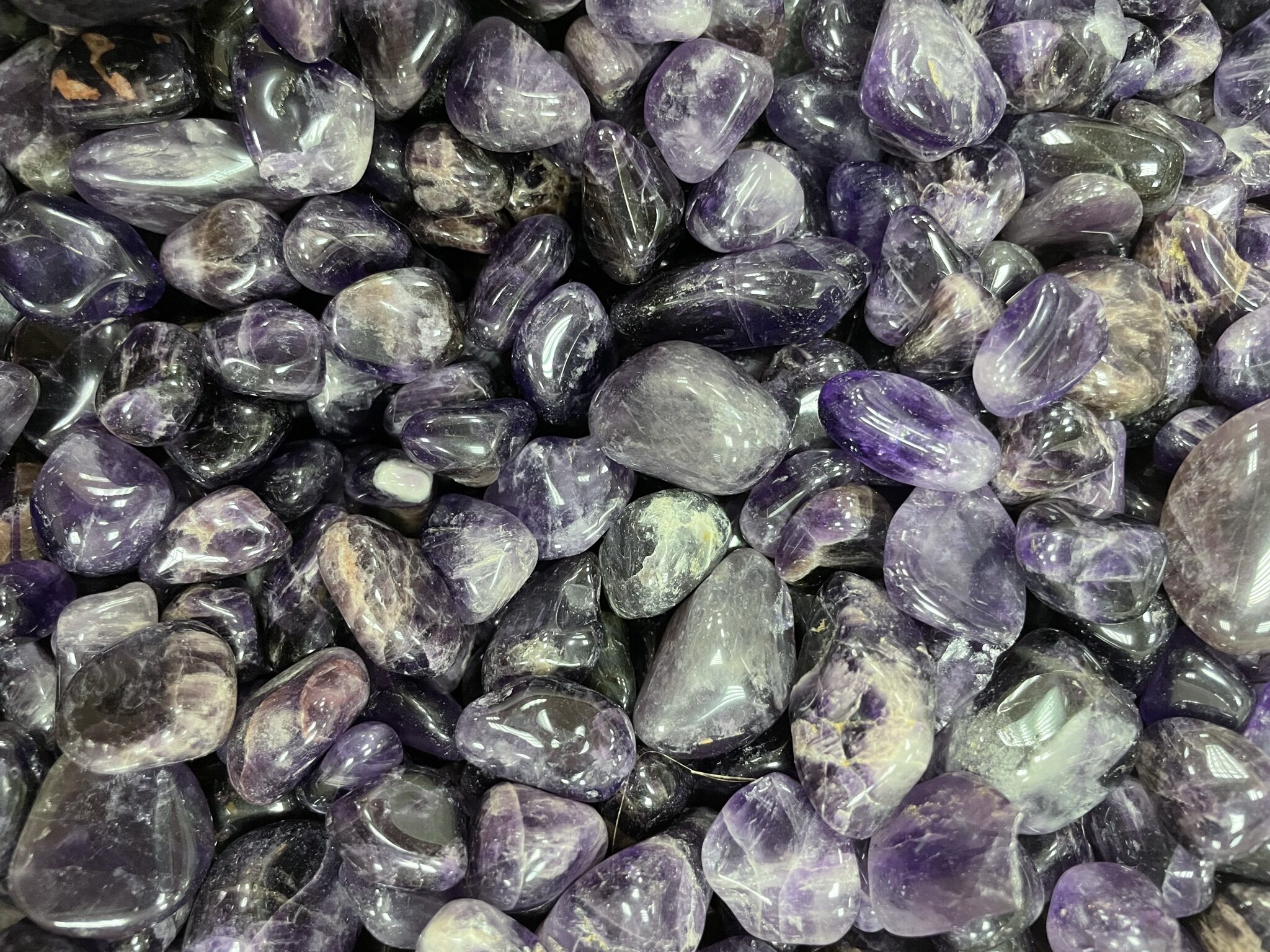
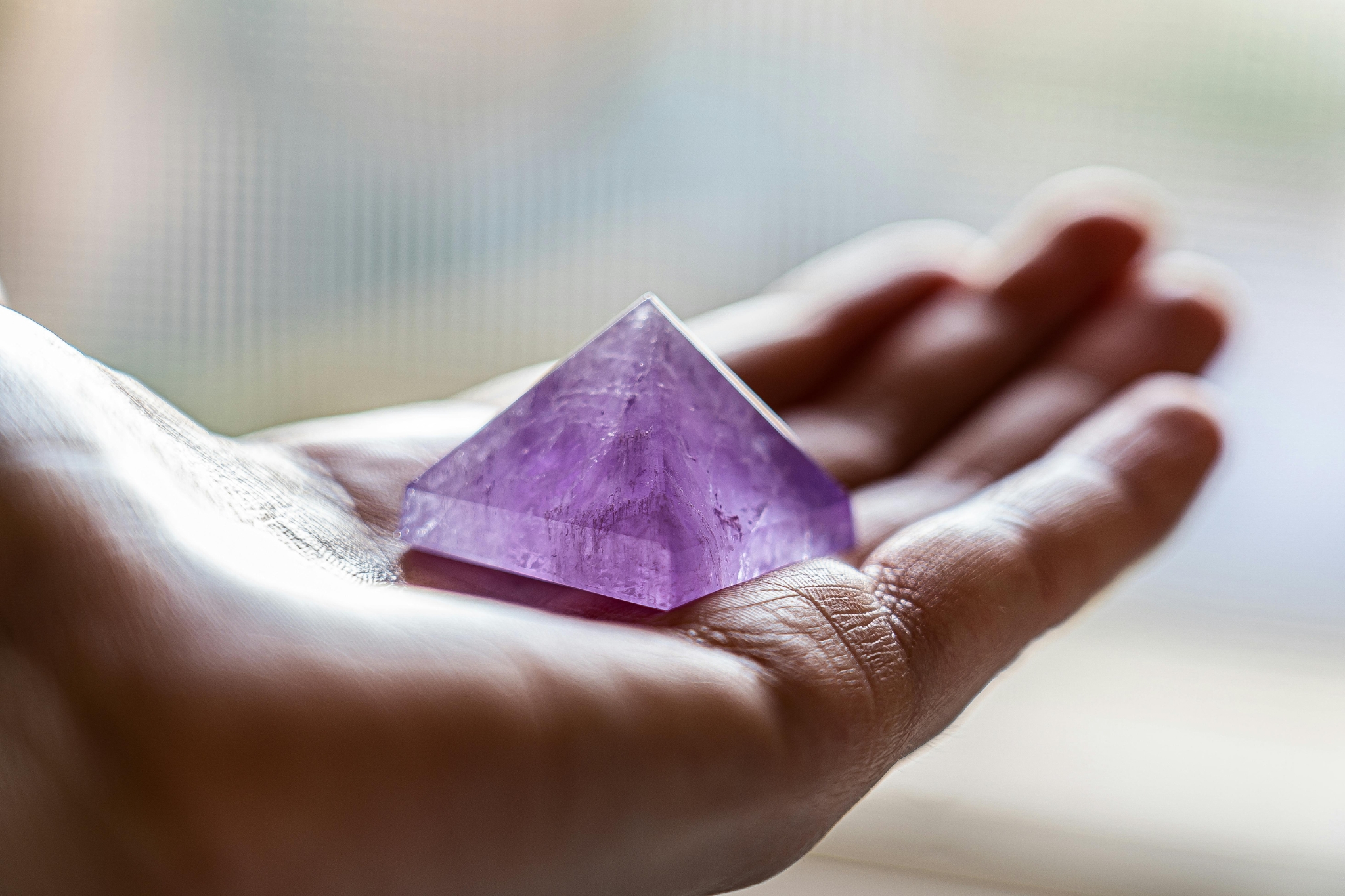
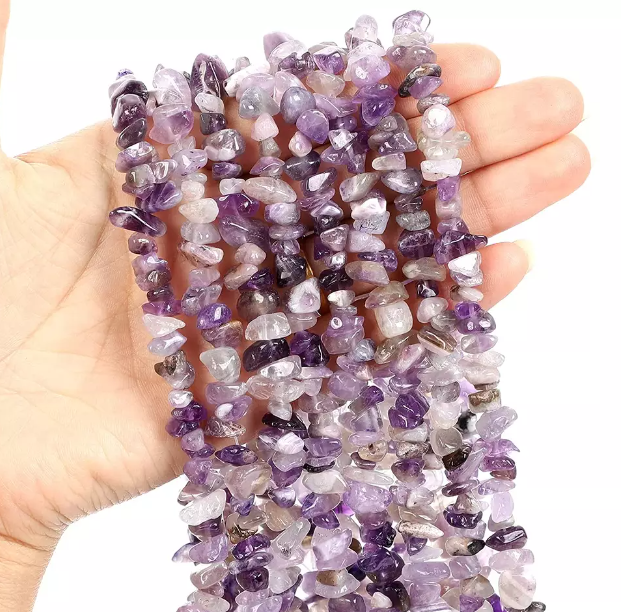
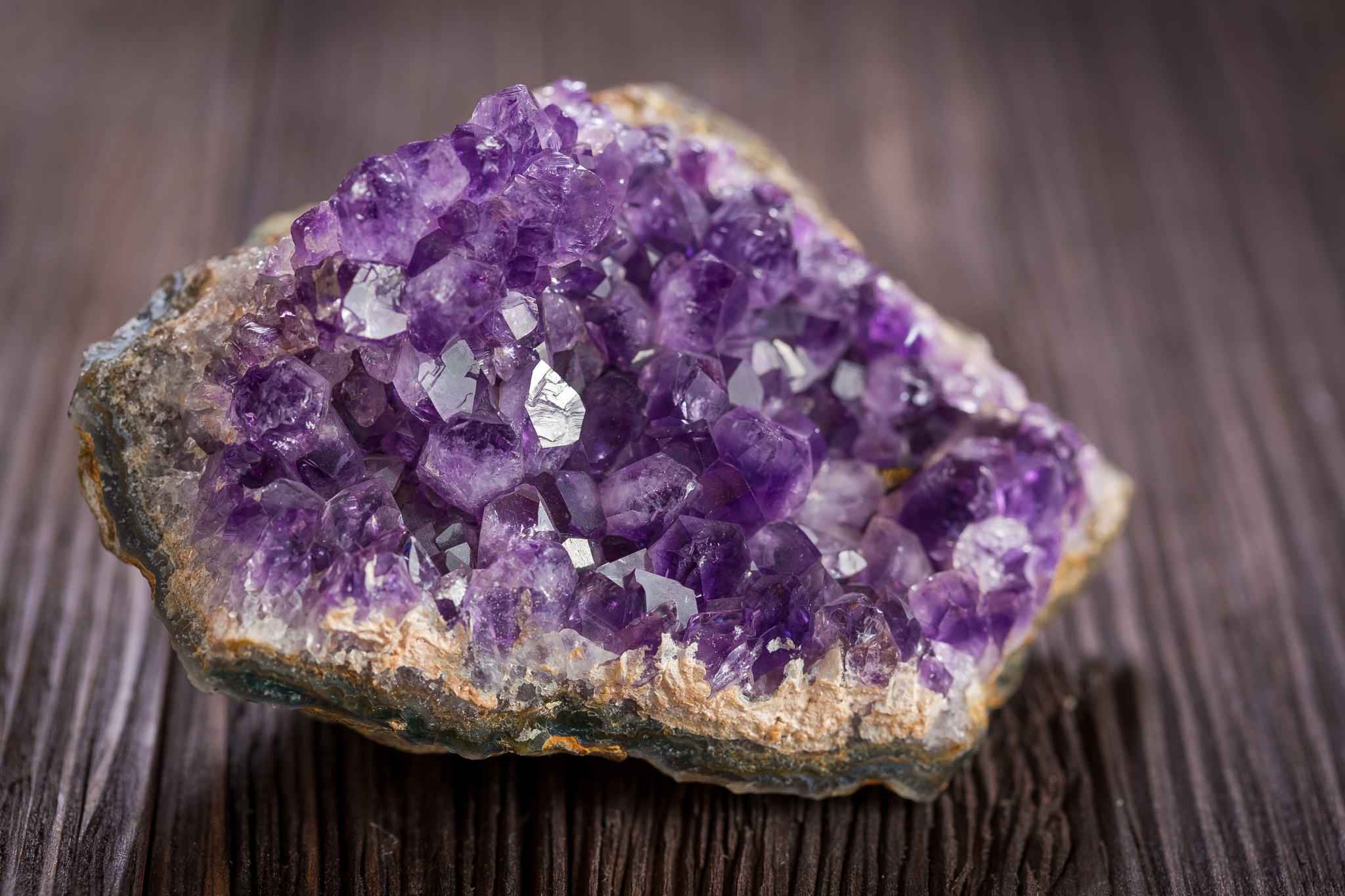
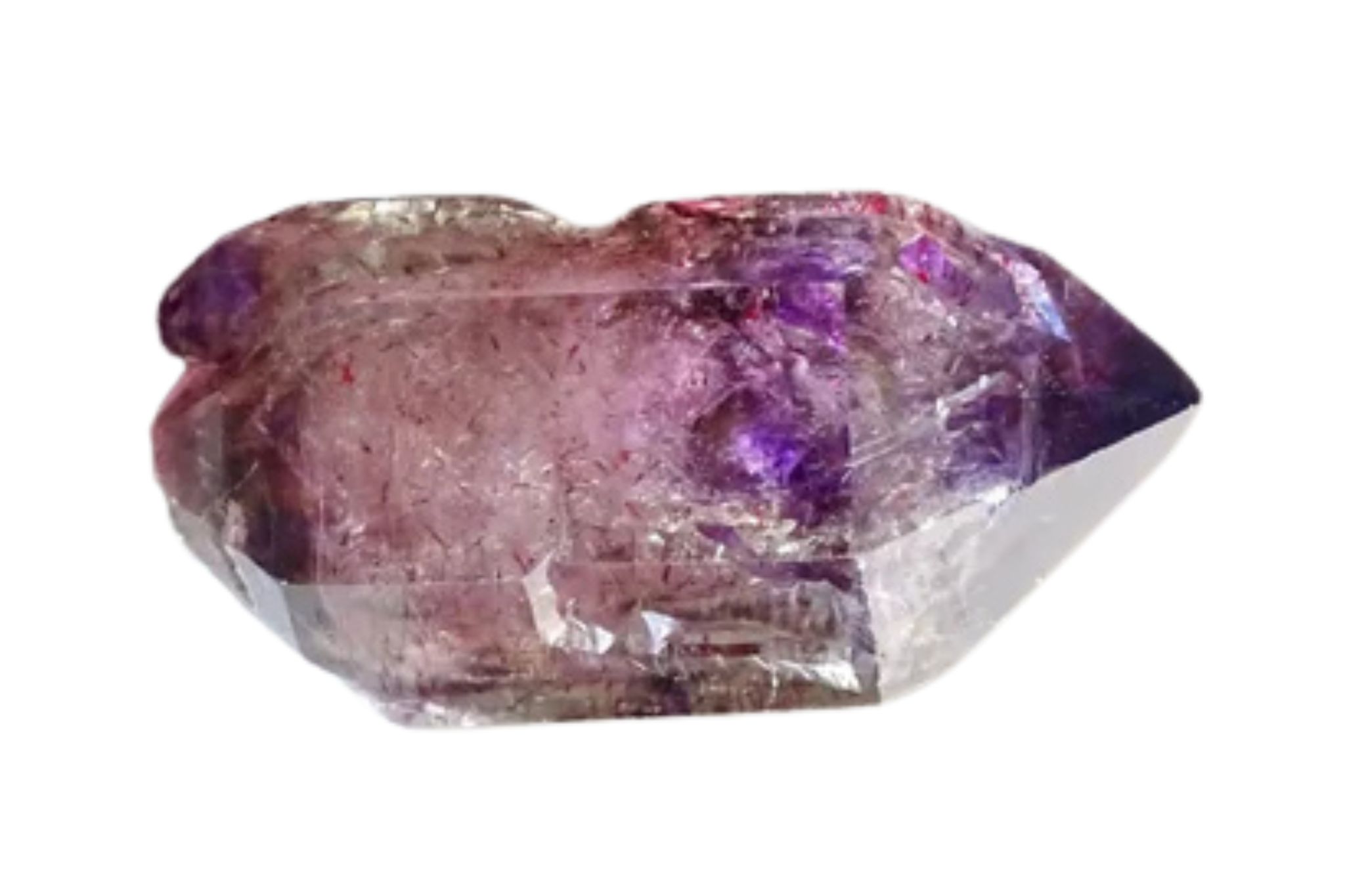
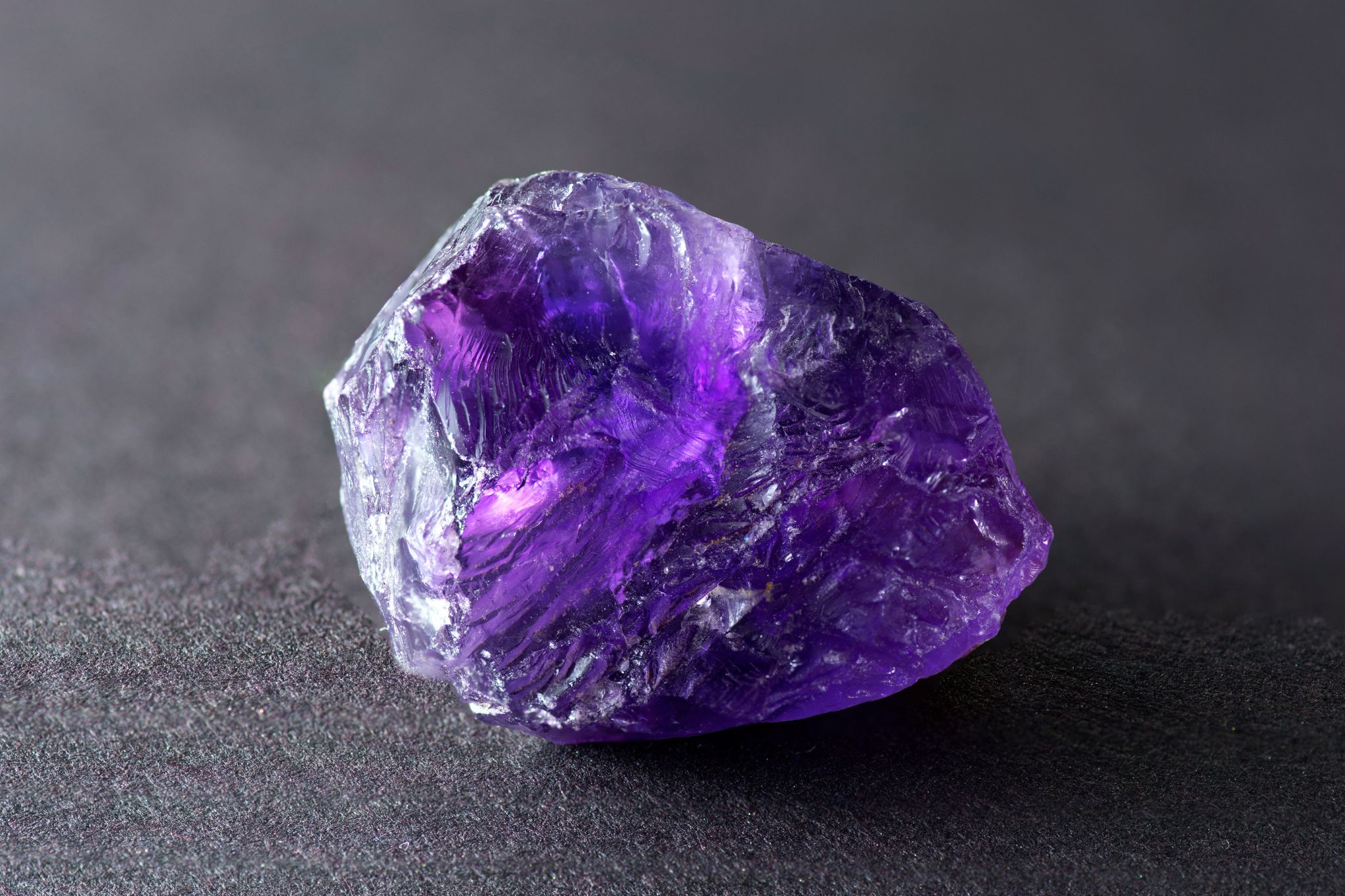
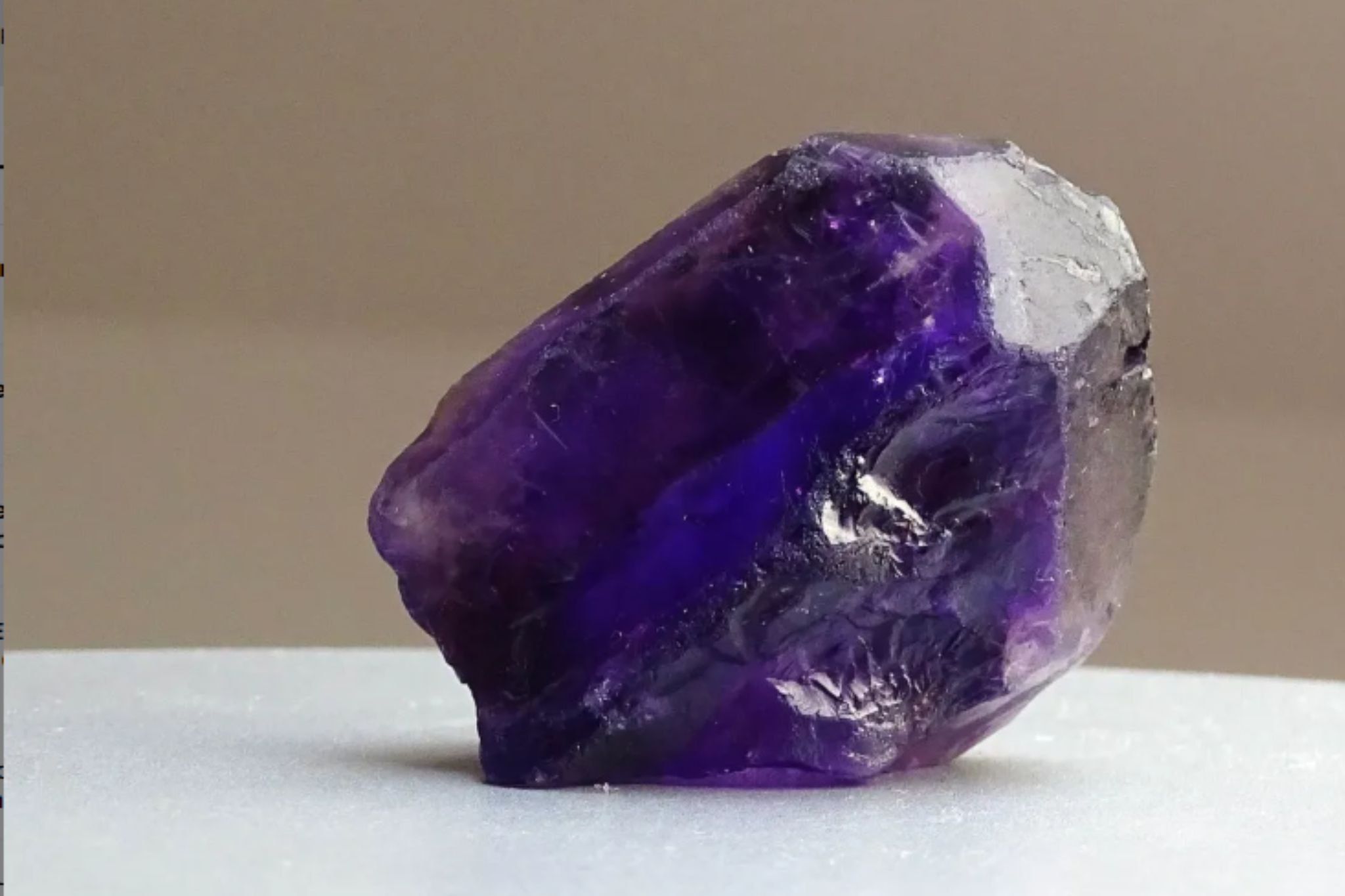
Amethyst is known for its rich purple color, natural beauty, and calming spiritual energy. As a variety of quartz, it has been valued for centuries in jewelry, meditation, and decorative objects. Traditionally associated with clarity, intuition, and inner peace, amethyst is also the birthstone for February and one of the most recognizable crystals in the world.
Main Energy
Calm, clarity, spiritual awareness
Chakra
Third Eye and Crown
Element
Air
Family
Purple variety of quartz
Hardness
7 on the Mohs scale
In This Guide
Formation
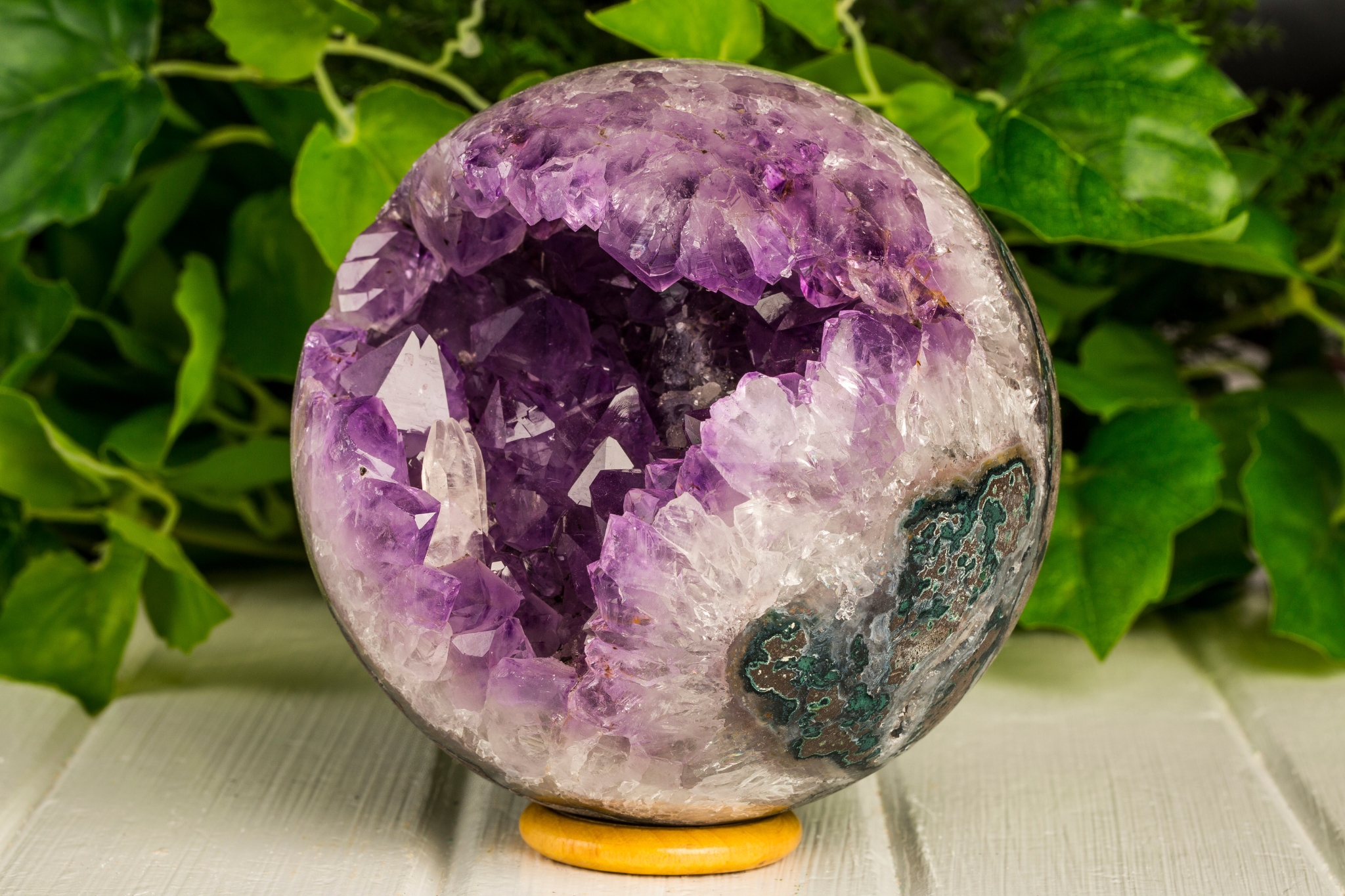
Amethyst mainly forms from silica-rich hydrothermal fluids that move through cracks, cavities, and open spaces within rocks. It is especially common in volcanic rocks, where hollow cavities can become lined with purple quartz crystals, forming amethyst geodes.
It can also occur in hydrothermal veins, druzy surfaces, clusters, crystal points, and massive quartz. Its purple color is mainly linked to trace amounts of iron within the quartz structure, combined with natural geological irradiation over time.
Colors
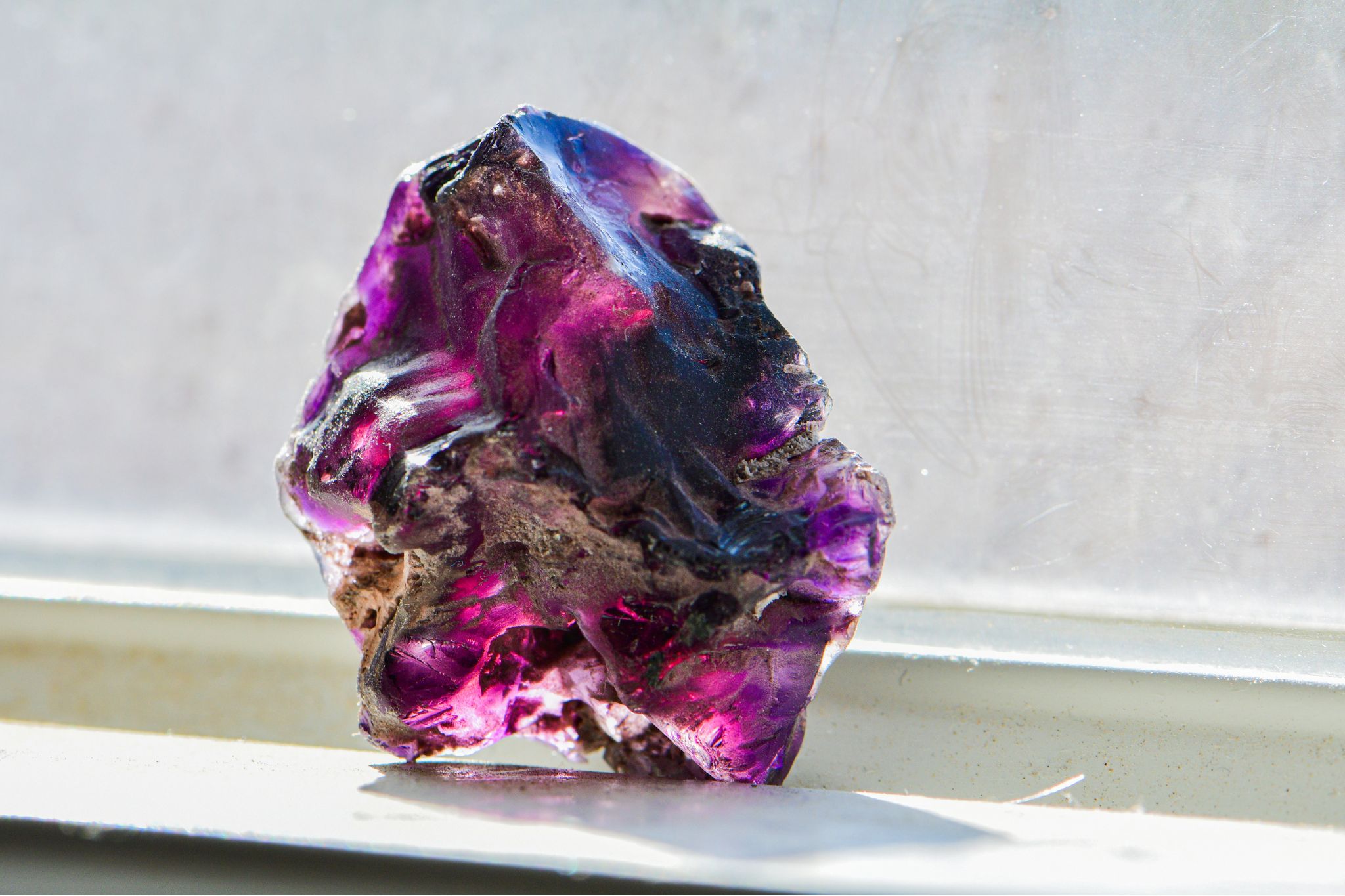
Known for its distinctive purple color, amethyst ranges from pale lilac and soft lavender to deep violet and rich royal purple. Some specimens show natural color zoning, with lighter and darker areas within the same crystal. Color intensity can vary depending on formation conditions, trace elements, and later exposure to heat or strong light.
Origin
Amethyst is found in many parts of the world, with important sources in Brazil, Uruguay, Zambia, Madagascar, Russia, and the United States. Brazil and Uruguay are especially known for large geodes and crystal clusters, while Zambia is recognized for richly colored amethyst. Madagascar, Russia, and the United States have also produced notable specimens, each with variations in color, clarity, and crystal form. Because amethyst occurs in many geological settings, its appearance can vary from pale lavender to deep violet, and from small crystal points to large geode formations.
History
Amethyst has been valued since ancient times for its purple color, durability, and symbolic meaning. It was used in jewelry, seals, amulets, and carved objects, and became associated with royalty, spirituality, clear-mindedness, and protective symbolism.
The name “amethyst” comes from the Greek word amethystos, meaning “not drunk” or “not intoxicated.” In ancient Greek and Roman traditions, amethyst was linked with sobriety and was believed to help protect against drunkenness or excess.
For centuries, amethyst was a highly desirable gemstone and was once much rarer and more expensive than it is today. Its value changed significantly in the 19th century, when large deposits were discovered in Brazil, making amethyst more widely available.
Spiritual & Emotional Properties
Traditionally, amethyst is associated with calm, clarity, intuition, and spiritual awareness. Its purple energy connects naturally with the Third Eye and Crown Chakras, making it a popular stone for meditation, inner reflection, and a quieter, more centered state of mind.
Calm & Inner Peace
Amethyst is strongly associated with calm energy, helping quiet the mind and create a more peaceful inner state.
Intuition
Traditionally linked with the Third Eye Chakra, amethyst is often used to support intuition, inner knowing, and deeper self-awareness.
Spiritual Awareness
Connected with the Crown Chakra, amethyst is associated with spiritual growth, higher awareness, and a stronger sense of connection.
Protection
Amethyst is traditionally considered a protective stone, often used to help shield against negative energy and unwanted spiritual influences.
Dream Work & Restful Sleep
Amethyst is traditionally placed near the bed or used in evening rituals to support relaxation, peaceful sleep, dream awareness, and a calmer nighttime routine.
Sobriety & Release
Long associated with sobriety, amethyst is traditionally used as a symbolic support for self-control, clear-mindedness, and releasing unhealthy patterns.
Traditional Wellness Associations
Disclaimer: The following information is based on traditional crystal practices and metaphysical associations. It is not medical advice, diagnosis, or treatment, and should not replace professional healthcare. Crystals may be used as a symbolic or complementary support practice, but they should never be used as a substitute for medical care.
Sleep & Nighttime Calm
Amethyst is traditionally used to support restful sleep, calm the mind before bed, and ease nighttime restlessness or unsettling dreams.
Headaches & Tension
Amethyst is often associated with easing tension, especially headaches or physical tightness connected with stress and an overactive mind.
Nervous System Calm
In traditional crystal practices, amethyst is connected with calming the nervous system, helping the body settle from stress, overstimulation, and mental strain.
Sobriety & Habit Release
Long associated with sobriety, amethyst is traditionally used as symbolic support for self-control, clear-mindedness, and releasing unhealthy patterns.
How to Use Amethyst
Daily Carry
Keep amethyst in your pocket or bag as a gentle reminder of calm, clarity, and spiritual protection.
Jewelry
Wear amethyst as jewelry to keep its calming and protective energy close throughout the day.
Meditation
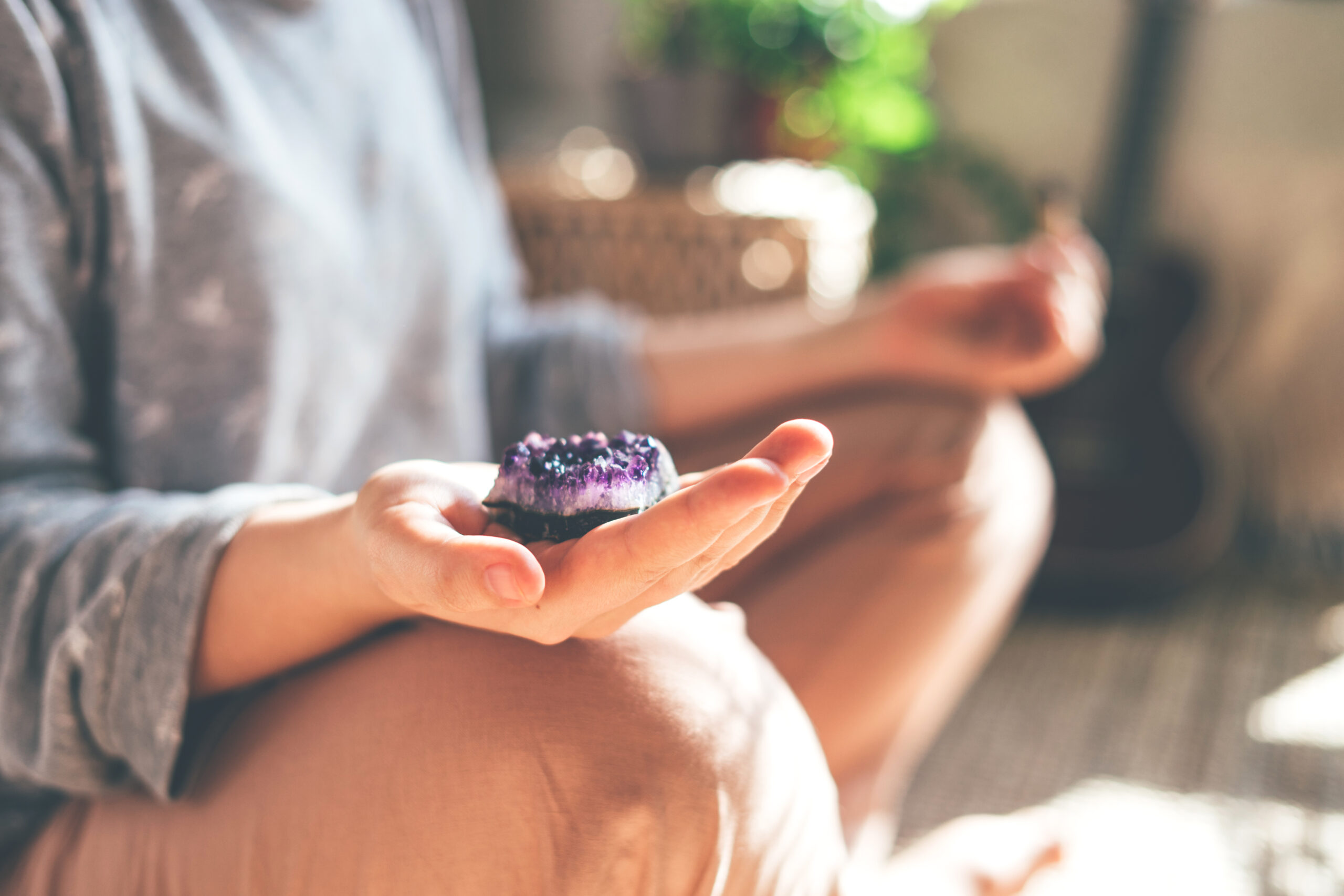
Hold amethyst during meditation to support inner calm, spiritual awareness, intuition, and a quieter state of mind.
Home or Sacred Space
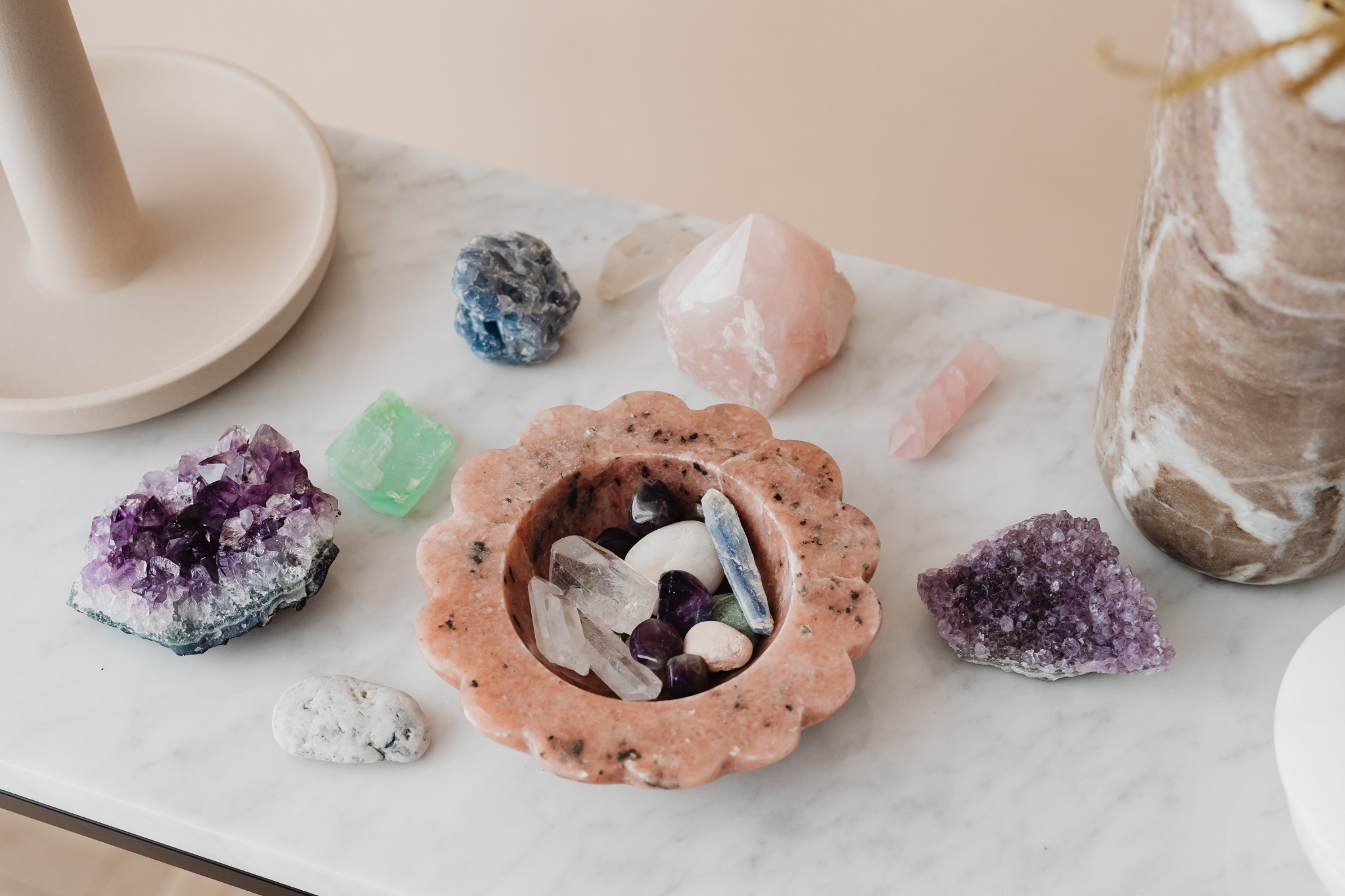
Place amethyst in your home, meditation area, or sacred space to create a peaceful atmosphere and support balanced energy.
Sleep & Dreams
Place amethyst near the bed or on a nightstand to encourage restful sleep, peaceful dreams, and a calmer nighttime routine.
Crystal Grid
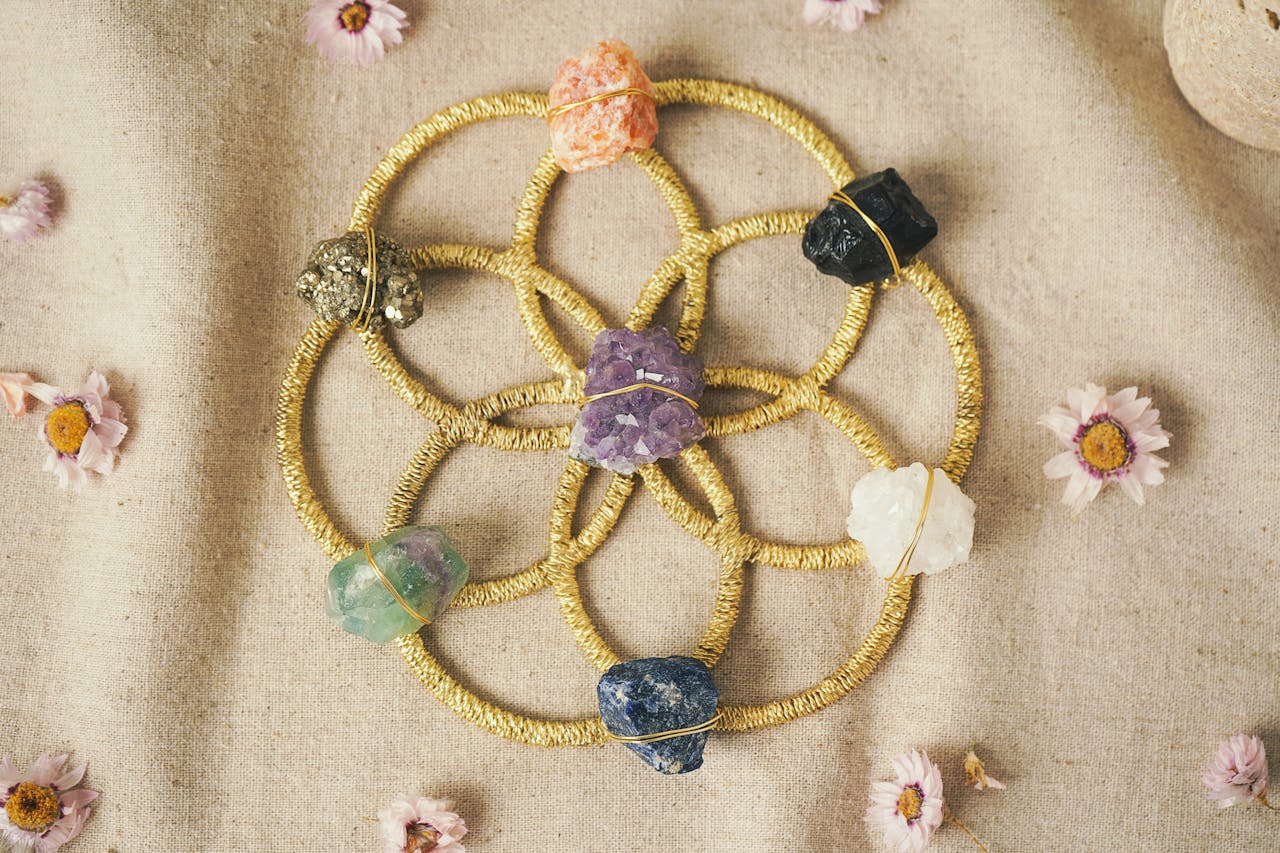
Use amethyst in crystal grids for intentions related to protection, spiritual clarity, calm, sleep, or intuitive awareness.
Cleansing & Care for Amethyst
Amethyst is a durable quartz crystal, but gentle care helps preserve its purple color, polish, and natural surface. Clean it with lukewarm water, mild soap, and a soft cloth or soft-bristled toothbrush, then rinse and dry it carefully.
Physical Care:
Wipe with a soft dry or slightly damp cloth. For deeper cleaning, use lukewarm soapy water and gently clean the surface with a soft-bristled toothbrush.
Avoid:
Prolonged soaking, steam cleaning, ultrasonic cleaners, sudden temperature changes, strong heat, abrasive surfaces, and long exposure to direct sunlight, which may cause the color to fade.
Energetic Cleansing & Charging:
Use smoke or sound to energetically cleanse Amethyst. To recharge it, place it under moonlight or near selenite or clear quartz.
Common Forms & Varieties of Amethyst
Amethyst appears in many recognized forms, colors, grades, and locality-based varieties. Some names describe color quality, while others refer to where the crystal formed or the natural structure in which it grows.
Natural Formations & Structures
Chevron Amethyst
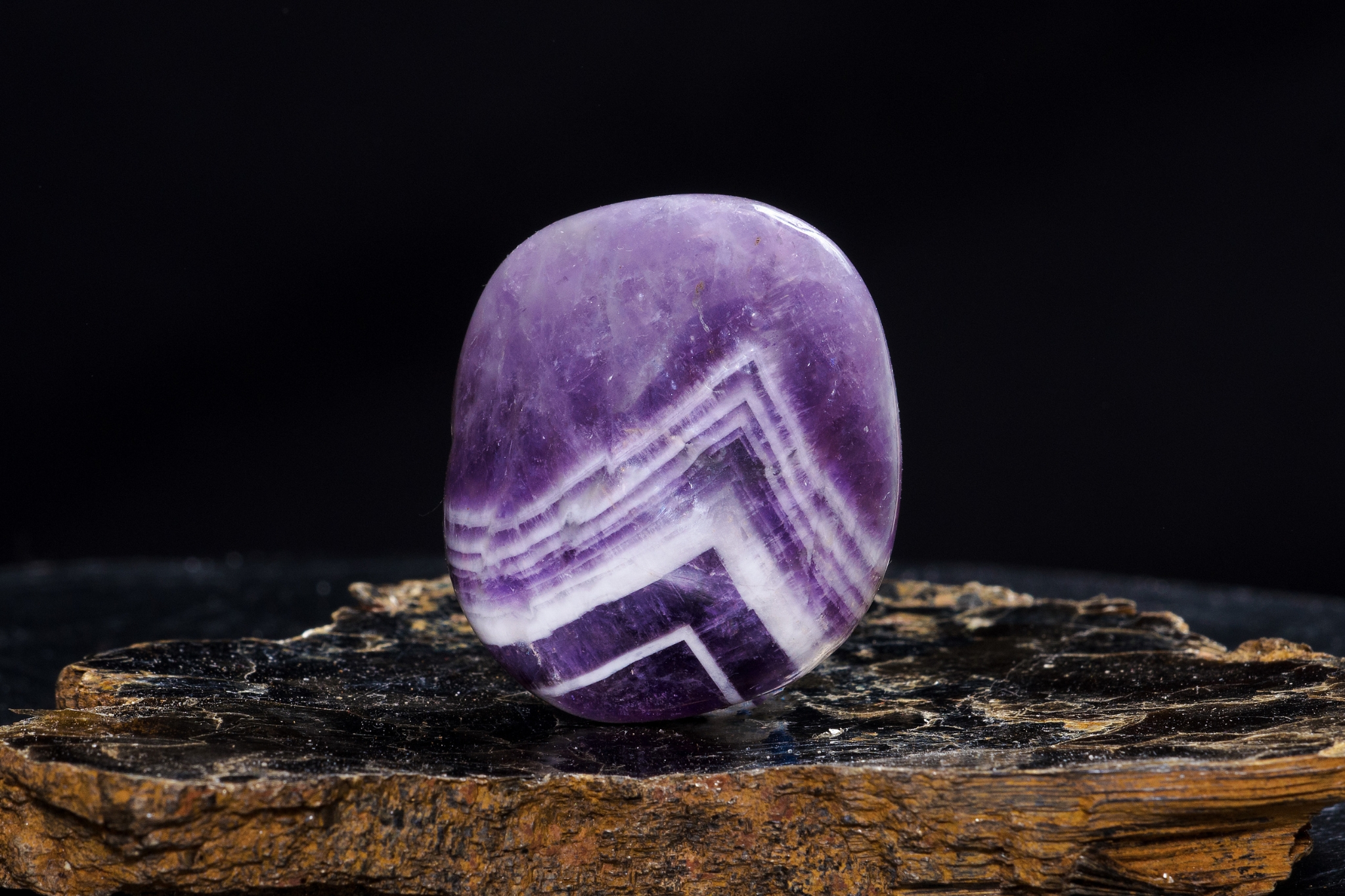
Also commonly sold as Dream Amethyst, Chevron Amethyst is a banded form of Amethyst with layers of purple Amethyst and white quartz, often creating V-shaped or zigzag patterns.
Origin: Brazil, India, Russia, and other quartz-rich regions Energy: Clarity, intuition, spiritual focus Chakra: Third Eye, Crown
Amethyst Cluster
A natural formation where many Amethyst crystal points grow together on a shared rock base. Clusters are often used as display pieces, meditation stones, and calming crystals for a space.
Origin: Brazil, Uruguay, Mexico, Zambia, United States Energy: Calm, protection, peaceful space Chakra: Crown, Third Eye
Amethyst Geode
A hollow or partly hollow rock cavity lined with Amethyst crystals, showing how Amethyst can grow inward from the walls of mineral-rich spaces.
Origin: Brazil, Uruguay, Mexico, United States Energy: Peace, cleansing, spiritual atmosphere Chakra: Crown, Third Eye
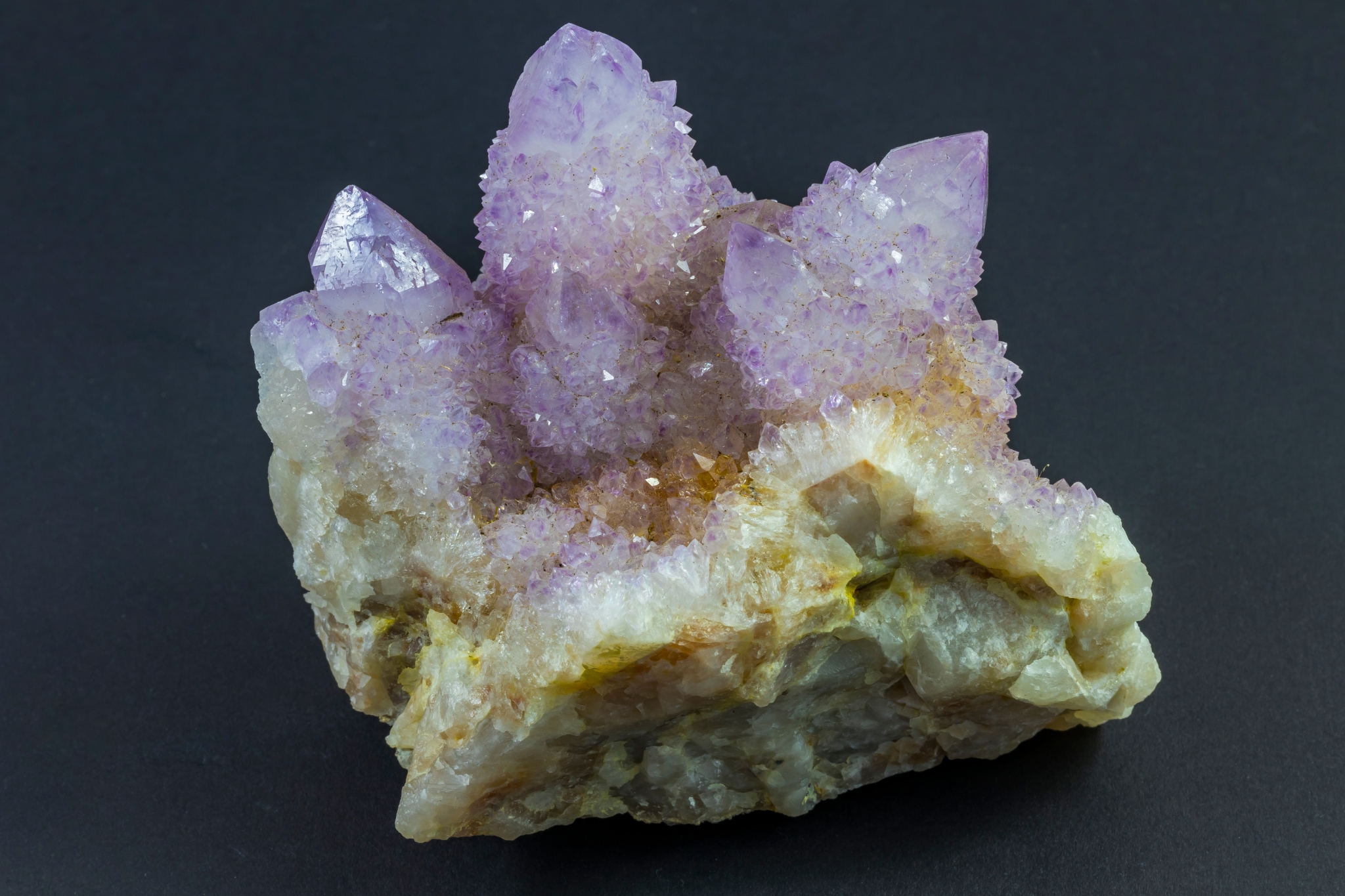
Spirit Quartz
Also called Cactus Quartz, this form has a larger quartz crystal covered with many tiny secondary crystals. Its sparkling, clustered surface gives it a unique cactus-like appearance and a delicate, textured formation.
Origin: South Africa Energy: Harmony, unity, group energy Chakra: Crown
Locality-Based Amethyst
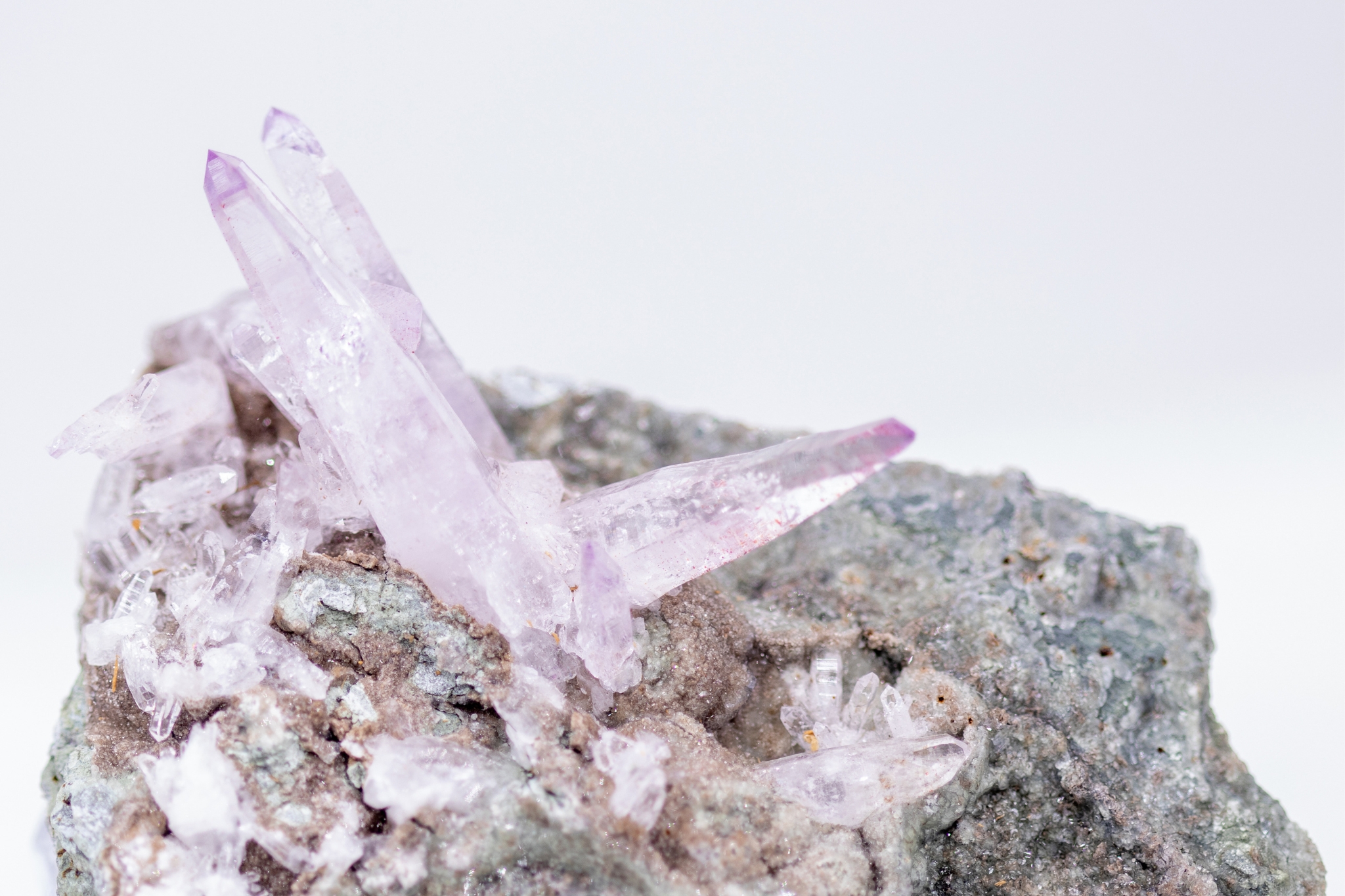
Vera Cruz Amethyst
A delicate Amethyst variety from Veracruz, Mexico, known for its slender crystals, lighter purple color, and high clarity. It is valued for its elegant, airy formation and soft, luminous appearance.
Origin: Veracruz, Mexico
Energy: Clarity, intuition, spiritual awareness
Chakra: Third Eye, Crown
Brandberg Amethyst
A highly collectible Amethyst from Namibia’s Brandberg / Goboboseb region, often showing natural blends of Amethyst, Smoky Quartz, and Clear Quartz. It is valued for its clarity, layered colors, and distinctive crystal formations.
Origin: Brandberg / Goboboseb region, Namibia
Energy: Clarity, spiritual insight, inner balance
Chakra: Crown, Third Eye
Uruguayan Amethyst
Uruguayan Amethyst is known for its saturated purple color and glassy, high-intensity appearance. Its deep tone and bold visual presence make it one of the most recognizable amethyst varieties.
Zambian Amethyst is known for its rich purple color, good transparency, and natural crystal appearance. Its clarity, depth of color, and refined structure give it a clean, high-quality look.
A pale lilac to lavender form of Amethyst, often used as a trade name for lighter, softer-colored stones. Its delicate color, gentle appearance, and soft transparency make it especially popular in jewelry.
Origin: Mainly Brazil; also Bolivia and Zambia
Energy: Softness, emotional calm, gentle clarity
Chakra: Crown, Third Eye
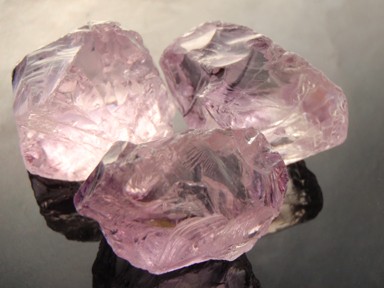
Pink Amethyst
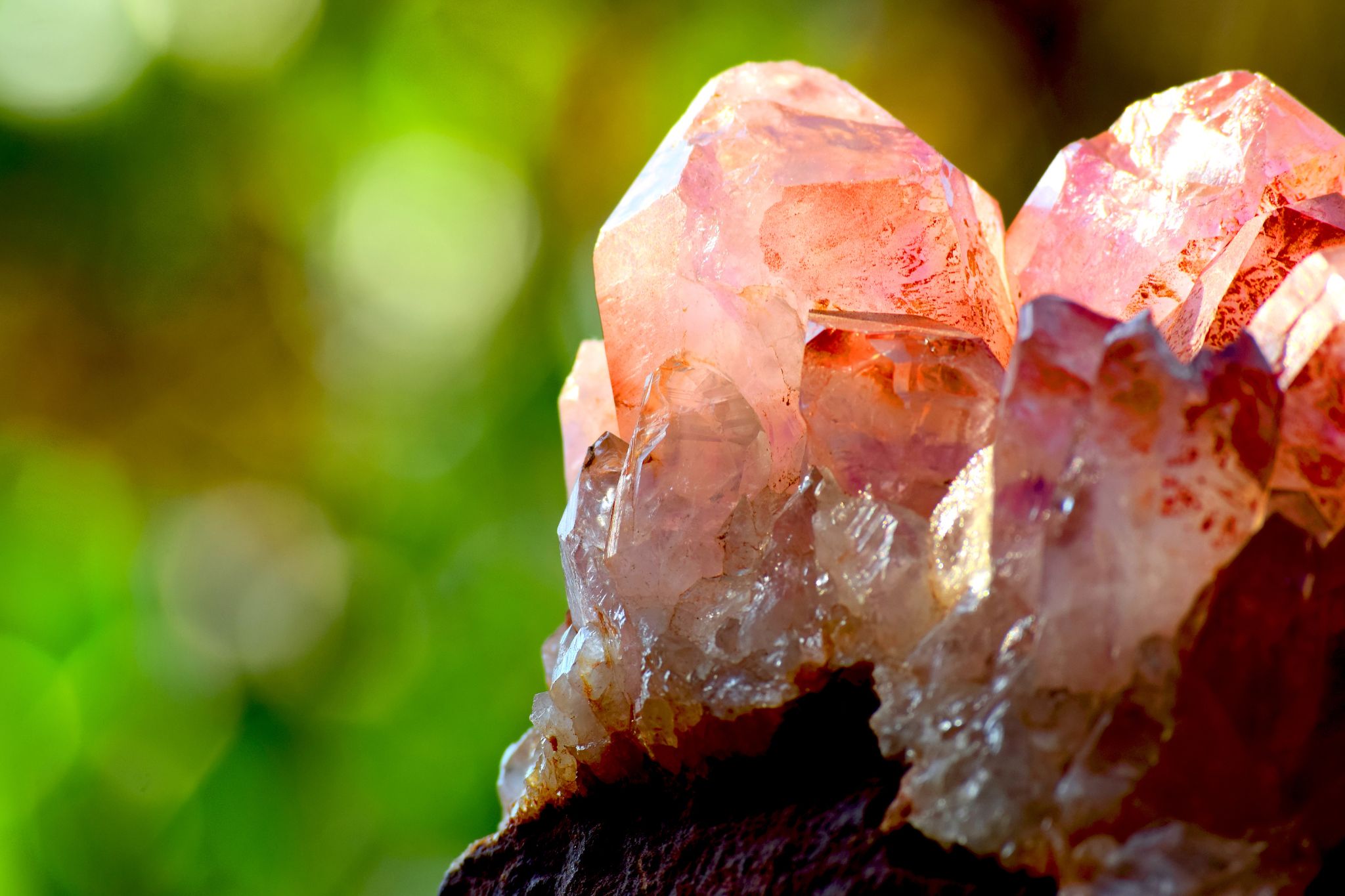
A pale pink to salmon-colored variety commonly known as Pink Amethyst, mainly associated with Patagonia, Argentina. Its soft color is linked to hematite or iron-oxide inclusions within quartz, giving it a gentle appearance that differs from classic purple Amethyst.
Origin: Patagonia, Argentina Energy: Emotional softness, calm, gentle love Chakra: Heart, Crown
Siberian Amethyst
A highly valued color grade of Amethyst known for deep, saturated purple with flashes of red or blue under different light. Although the name comes from historic Russian material, today “Siberian” often describes the color quality rather than the stone’s actual origin.
Origin: Historically Russia; now used as a color grade Energy: Depth, spiritual clarity, refined protection Chakra: Crown, Third Eye
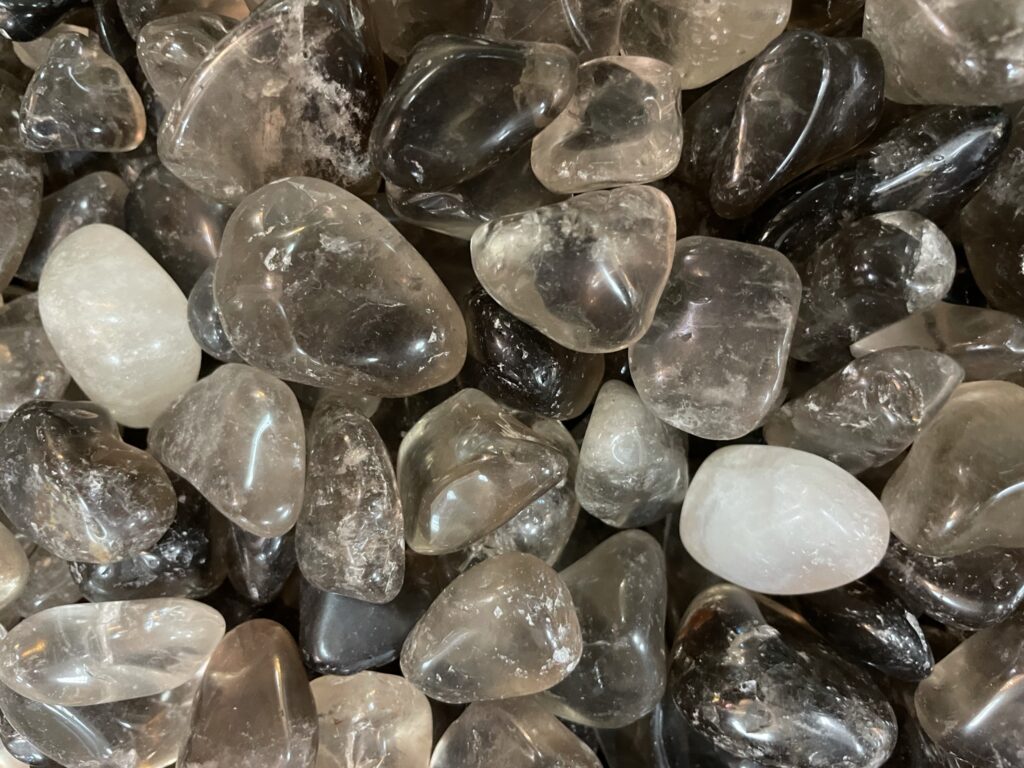
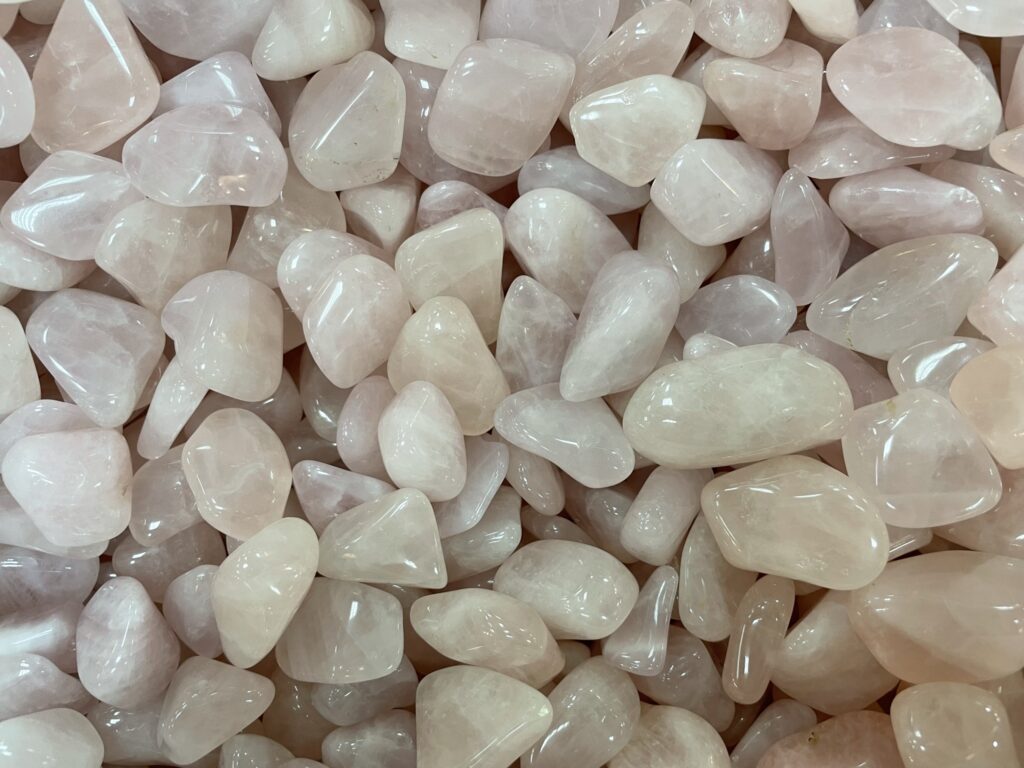
Amethyst belongs to the quartz family, a major mineral group that includes many well-known crystal varieties. Explore related quartz crystals that share the same mineral foundation, while offering different colors, formations, and energetic qualities.